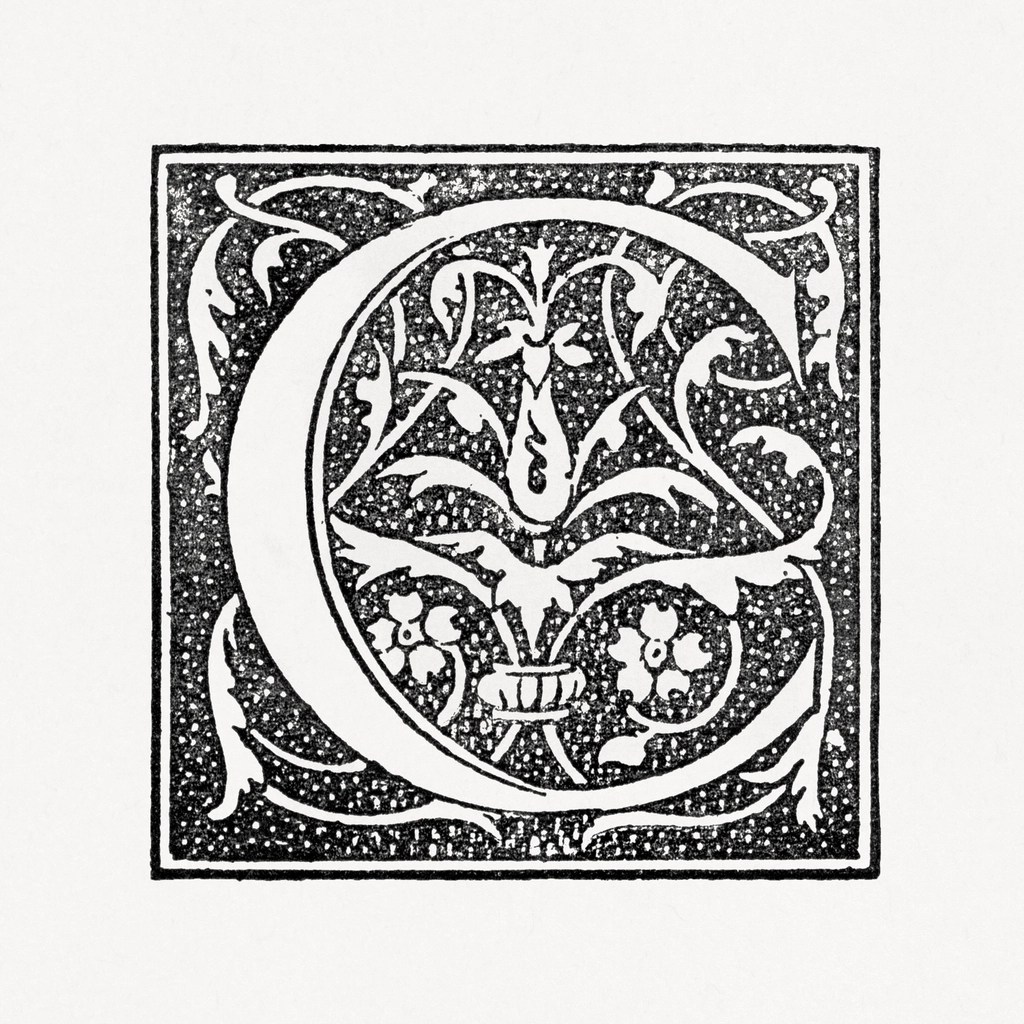
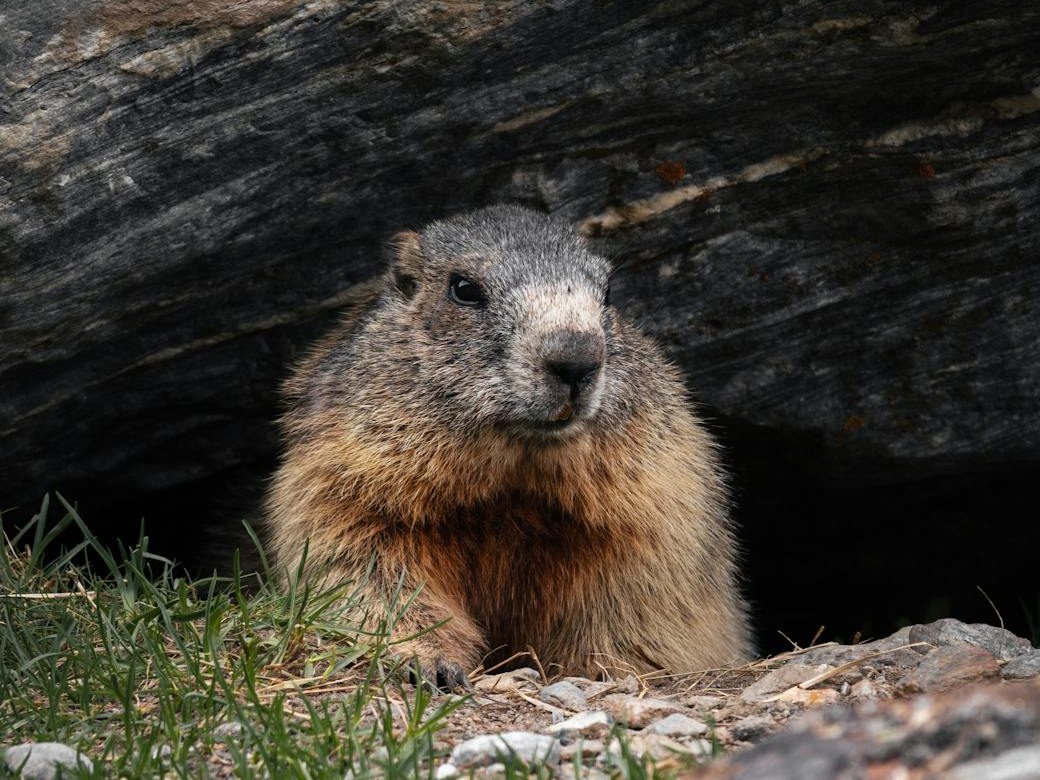
Happy New Year! After a break that took me through the last quarter of last year, I am back pushing at my data verification boulder once more. As you might be able to tell from the image above, I am finished with the letter D. D contains 100 verified entries, which I mention primarily because it’s such a conveniently round number. Particular highlights include the UNC-Chapel Hill Davis library, the Detroit Public Library, Duke University library, UCSB and UC-Berkeley, The Royal Danish Library, and (unexpectedly for me) The Biblioteca de Catalyuna in Barcelona, Spain.*
Number of Libraries Confirmed: 149 Number of Libraries Entered into the Database: 2 Number of Extant Copies Confirmed: 618
*Do note that when we’re talking large library systems, often times the library I wrote down initially is not where the thing is actually housed, or it’s in special collections inside the library at large, or it’s off in storage somewhere, so for now this bit of data is still slightly wibbly. The existence of the books is confirmed, though, and that’s the important thing.
Hello, friends. My apologies for the short note here (and for missing September entirely). Between dodging burnout and having Covid for the first time, this project has been temporarily back-burnered. I expect that by the end of the year I’ll be working on it again with a bit more oomph, but I frankly needed the break. I have progressed a bit on “D” but I haven’t finished the letter yet. For November I’ll post statistics again and get things moving, but for now I just wanted to touch base and note that I haven’t abandoned the project or forgotten to update. I’ve just been a bit snowed under, and I’m looking forward to that letting up. Good thoughts, friends.
Today’s post is brought to you by The Letter C, as they say on Sesame Street. This is because I have finally finished with the “C” libraries in my list! Hooray!
I mean, seriously. I had no idea of the undertaking “C” was going to be when I started. It wasn’t the best of times or the worst of times, but it was a lot of times, of that there is no question.
Of particular note, but in no particular order:
The number of institutions whose libraries are named, simply, “Central Library.” Really, while I admire the simplicity, you could differentiate yourselves a bit more.
Cambridge. I got through a first pass that I think is complete, but I will be revisiting it just to be sure.
Honorable mention to College Library at the University of Wisconsin, Madison. You have way more useful volumes than I realized when I started this, AND you’re within a relatively reasonable driving distance. Looking forward to visiting you eventually!
Also, the Library of All Souls College at Oxford goes into the Oxford pile along with the Bodleian Library (and other Oxford libraries) to be sorted through more thoroughly at a later date. — Edited to note: this library was in “C” because my earlier research showed it was named the Codrington, but that name was changed in 2020. Guess OCLC/WorldCat hadn’t updated their records yet when I did my research.
Also, just for the record, I know I missed my July post. I meant to post my update, but then I posted June late and I was teaching and then before I knew it we were already at August, so… yeah. So be it. It’s okay. The victory over the significant number of C-entries more than makes up for it, to my mind. No worries. On to a new semester.
*Number of libraries confirmed: 116 Number of libraries entered into the database: 2 **Number of extant copies confirmed: 518
*Waiting on confirmation from Connelly Library at La Salle University. Their search seems to be limited to those attending/working at the university. Have emailed for more info. **Not counting University of Oxford
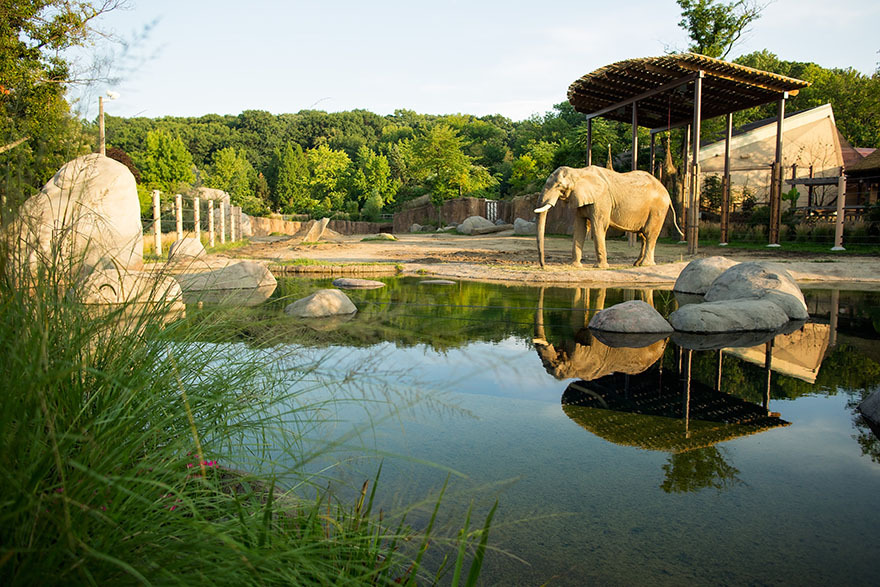
Today’s picture is appropriate because I went to see the elephants this morning at the Cleveland Zoo — it’s a fantastic habitat and the park is wonderful. Just a reminder to get out and see the wildlife and support your local zoological park’s conservation efforts. The world may be on fire, but animals don’t care about politics (and it’s one of the areas where we can actually make a difference).
Anyway, to the latest project news. First, I haven’t been working as hard as I could have, but I’m also teaching, so… yeah. A girl’s got to be able to play PS5 sometimes, after all. That being said, I have made some progress this month. I have not visited libraries as I’d hoped, but I am making some contacts and working on setting up my categories for the eventual bibliographical data. In the meantime, I’ll keep plinking away at it (I’m almost done with libraries that start with “C”).
Number of libraries confirmed: 93 Number of libraries entered into the database: 2 *Number of extant copies confirmed: 448
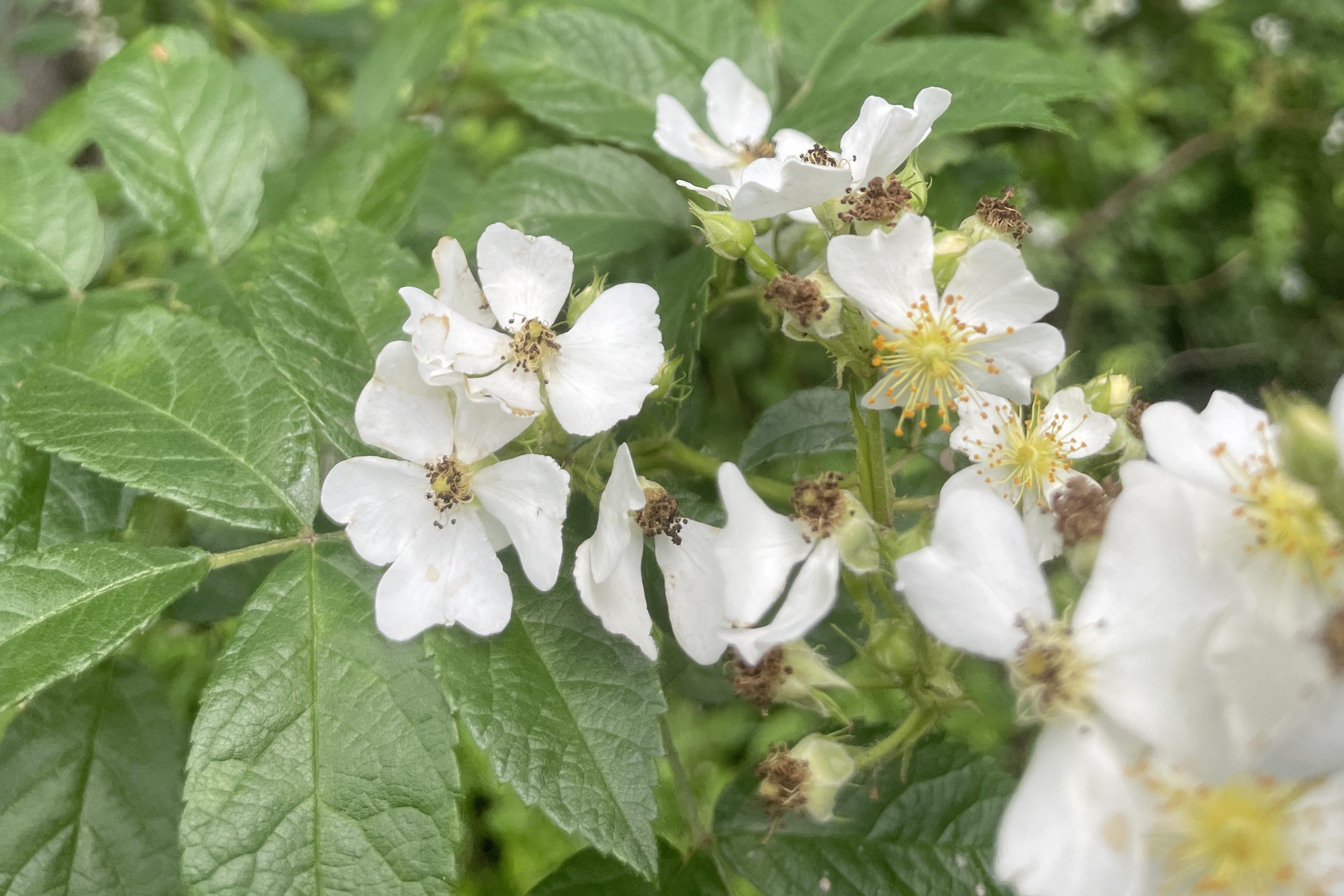
Wild white roses from my backyard (which I just learned are invasive). Alas.
Welcome back, gentle readers! Now that the semester is over (or hopefully nearly so) I hope the summer is treating you kindly and providing needed rest and relaxation. As for me, I start teaching an online evening class next week that I am not quite done planning for, but I will be by the time we get to it.
I’m also thrilled to announce that I had my first book review published! I had the pleasure of reviewing Stephen Ramsay’s On the Digital Humanities: Essays and Provocations in ABO: Interactive Journal of Women in the Arts, 1640-1830. It was a relatively painless process, and the staff were communicative and gave excellent feedback — I’d be very happy to work with them again in the future.
As to the LBP, I’m happy to announce that I’m back to it. I’ve been verifying libraries and titles (Cornell’s Rare and Manuscript Collection, we’re going to be spending some time together in the future). I’m debating putting in for the Lewis Walpole Library Fellowship for next year — they don’t have a huge number of books I need, but the ones they have are significant and I should be far enough along by then to make use of it. My goal for the summer is to make some real headway in verifying content and to make some initial rough passes at some local copies and make decisions about how the data is going to work for the actual bibliography portion.
Number of libraries confirmed: 74 Number of libraries entered into the database: 2 Number of extant copies confirmed: 367 (not counting anything at Oxford)
Greetings, Gentle Readers! Welcome to the Lennox Bibliography Project website’s second birthday! *blows noisemaker* I’m thrilled and amazed that I’m still working on this and that I’ve actually made progress, albeit more slowly than I would have liked. Still moving forward, though.
Again, this month has seen a ton of grading and not much in the way of progress. What it has also seen, however, is me prepping my presentation for the upcoming ASECS 2024 conference! Starting later next week (eep) I will be in Toronto, ON with a bunch of other 18th-century scholars and doing my part to further the (small-d) discourse in our field. For those in attendance who might be interested, I’ll be presenting on some of my findings thus far from the LBP.
Specifically, I’m on panel #112, Friday April 5th, from 4:30-6:00pm in the Elgin room. It’s the second of two panels from the Bibliographical Society of America, titled “Bibliography by the Numbers: Meta-Bibliography and the Study of Eighteenth-Century Book Culture.” My paper is titled (not terribly creatively) “The Travels of the Memoirs of the Duke of Sully.” Belatedly I realized I should have named it “So Many Copies: Charlotte Lennox and the Duke of Sully” but alas, inspiration came far too late. Feel free to stop by!
Welcome back, Readers! I have returned from my research “vacation,” for certain values of “returned” anyway. I am still teaching the overload situation this semester, but it’s going well and I feel like I’m mostly not drowning at this point. I am only now resuming work on the project, though. It’s been a good time to take a break and I feel much more able to bring my attention back to it in a positive and constructive way.
One of the things this break brought home to me is how I’ve basically worked on this non-stop for two years at least, prior to the beginning of this past holiday season. It’s so easy to get caught up in the work, particularly when it’s something that we’re interested in and want to see happen, that we can fall victim to our academic training of “never stop working” and forget that sometimes it’s good to let the fields like fallow for a bit.
I’m not saying that everyone is always in a situation where that’s feasible, or necessarily even desirable — we all have our own relationships to our work and research. One of the things I’m discovering on my own career journey, though, is the inexorability of erosion. Time, familiarity, training, and anxiety all wear away at our boundaries, our self-images, our work-life balance, and our storehouses of resolve and empathy. It takes active work to shore up those borders and keep ourselves whole and healthy. Much like the mansions on the hilltops in California now being undermined by landslides and erosion, with the ground beneath them slipping away into the ocean, we’re similarly at risk of being washed out and ground down to nothing. The world, your institution, your research, your students — none of them will tell you to stop when you’re already spread thin.
I know I’m not saying anything really new here. The thing that really hit me, though, is that although I do want to push forward and I’m excited about where this project is going to go, I don’t have a clock on this or a deadline I have to make. I don’t have to push for some external timeline that’s only in my head and sacrifice myself and my enthusiasm for this project in the process. Pacing myself — taking breaks — is a good thing. So for those following along in the background, I appreciate your patience and hope you bear with me during quieter times. I should have more progress to relate soon.
Happy holidays, gentle readers! I hope this season finds you reasonably well, at least on a local level, given the general setting of GAAAAAH globally at the moment. I myself have been digging deep into work and family and friendship as a sustaining focus for the past two months, hence the lack of distinct November update.
I had the good(?) news that I’m teaching both an extra class in the spring and a class online in the summer (assuming it fills), which on the one hand, yay! My car approves this decision. On the other hand, prep and grading and whatnot have largely eaten my ability to focus on Lennox work, so I’ve decided to let this lie fallow for the holiday season while I work on clearing my plate for the coming year. In January, therefore, I’ll be picking back up with the project work as normal. I hope to have new progress to update next time around.
For now, however, I hope that whatever you celebrate, you are able to take a moment to yourself and acknowledge the dark and light, the turning of the year and the brightness inherent in the human spirit even when things seem hopeless. May we all have a brighter 2024.
Photo by u0410u043bu0435u043au0441u0430u043du0434u0430u0440 u0426u0432u0435u0442u0430u043du043eu0432u0438u045b on Pexels.com
Greetings, gentle readers! And a happy decorative gourd season to all who celebrate. As we reach midterms in the fall semester and all the grading that entails, I have taken a break to update you on this month’s progress.
The process of confirming or eliminating physical copies continues apace. Since the last update, I’ve worked through another 37 libraries*, completing the libraries that begin with the letter “B”. It will likely not be a surprise to anyone to know that there are quite a few libraries that begin with the letter B that have Lennox holdings, and that’s after some elimination of spurious, online access, or deaccessioned copies.
As for the database work, I’ve about decided that I’ll put in the libraries I’ve confirmed as locations for now, but not the individual titles. I may change my mind about that as I move forward, but we’ll see. I go back and forth on the utility of it prior to actually seeing and cataloging the data for a given copy.
In other news, I’m also trying to decide if I want to apply to any fellowships for next summer’s research. I’d been hoping to be further along than I am (though it’s not like every letter will have as many entries). It seems a shame to let a summer go to waste, but I’ve still got so much cataloguing to do. I have a little while more to ponder and see if the pace picks up in this portion of the endeavor.
Number of libraries confirmed: 77 Number of libraries entered into the database: 2 Number of extant copies confirmed: 299 (See Note)
* Note: Those observant readers among you will have noted that the letter “B” also applies to “Bodleian,” as in the famed library (or set thereof) at the University of Oxford. I cannot claim to have completed verification of my list of items at the Bodleian, given the nature of its search engine, the fact that defaults to including all the Oxford libraries, of which there are many, and the fact that it’s by no means uncommon to have multiple copies of the same work at different libraries within the greater institution of Oxford. I started working on it and quickly realized I was just going to need to pull out all the Oxford listings, put them in a big list with a couple of notepads and sticky notes as needed, and just do all of them in one big push. As I’m not planning to be in the UK any time in the near future, this isn’t really a problem per se, but it does mean that all Oxford listings are considered not fully confirmed until I clime that particular molehill.
Greetings, gentle readers! September finds me pushing forward still, albeit a bit more slowly due to general life issues and a lot of time dedicated to sorting through the works housed at the Beinecke Rare Book and Manuscript Library at Yale. Needless to say, we’re going to have to spend some time there in the future, to no one’s surprise.
I currently have 30 libraries verified, having removed two or three so far that ostensibly had only a couple of items at most, and they turned out to either simply not be there, to belong to an affiliated library on the same system, or to be online or microfom versions of the work. I am looking at applying to the Lewis Walpole Library Fellowship this year, along with perhaps a local fellowship that might cover some gas money for libraries near to hand.
Number of libraries confirmed: 34 Number of libraries entered into the database: 2 Number of extant copies confirmed: 148




 Lennox Bibliography Project