Greetings, dear readers! It’s the end of March and I am up to my eyeballs in grading, as is the way of things. I will be attending ASECS 2026 in Philly this year, which should be exciting. I’m making progress on being caught up on my feedback on student papers, which is something of a relief, but for now I’ll settle for reporting the small amount of progress the LBP saw this month and take comfort that even amidst the sea of grading that happens when you teach an overload, one can still paddle a bit towards the eventual destination.
This month brings us into the letter M. M has a lot going on, and so I doubt I’ll be done with it before May. I will continue to poke at it, however.
Things I’ve learned so far from the Letter M:
First, the number of institutions that just refer to the library as “Main Library.” It’s too many. Differentiate, people. You know who you are.
The University of Edinburgh has a number of good things I need to see, including a surprising number of editions of the Memoirs of the Duke of Sully for a non-US institution and a copy of The Life of Harriot Stuart, which isn’t easy to come by.
Number of libraries confirmed: 360 Number of libraries entered into the database: 118 Number of extant copies confirmed: 1257
Greetings, dear reader! I suddenly find myself half-way through February, and thus I am scrambling to post my monthly check-in. This month’s status update is brought to you by the letter L, indicating that I finally finished L with its small cache of wonders. I’m starting on M next, obviously, and not particularly looking forward to the unfortunate number of libraries titled “Main.” This letter looks to have around 200 entries by volume, so it should be do-able in a month’s time.
Things I learned from L:
In addition to a number of various copies of Memoirs of the Duke of Sully in all its assorted names, the Langsam Library at the University of Cincinnati has a copy of that rare bird, Hermione, or the Orphan Sisters, published by Minerva Press in 1791. Now this gothic potboiler was published anonymously and its attribution to Lennox is, let’s say, tenuous at best. By 1791, however, Lennox was in pretty dire straits financially speaking. Euphemia, published in 1790, wasn’t successful, and most of her formerly influential publishing friends had died some years before. I know that Cadell, who took over for Millar’s bookshop, was good friends with Johnson, but I haven’t looked deeply into his relationship with Lennox and whether her falling out with Johnson affected their business together. Regardless, Lennox was not above doing what was needed to make money, Minerva Press was open for submissions, and thus it’s possible Hermione is hers (or at least it’s a really interesting question as to why it was attributed to her, if not).
The Library of Congress has at least a month’s worth of content for me to parse through. This probably isn’t surprising in the least, but that doesn’t make me any less excited.
Number of libraries confirmed: 351 Number of libraries entered into the database: 118 Number of extant copies confirmed: 1227
Greetings, gentle reader! Just as GBBO returns with a new season in the USA, so do I return this month with an update on the Lennox Bibliography Project. The world may be a searing hellscape with death, destruction, groypers, assassinations, the death of health insurance and job security in academia, but at least we’ve got a banging recipe for hobnobs I cannot wait to try. I went retro and made old-school, crossed-with-fork-marks peanut butter cookies this weekend, and I do not regret it in the least. That is not why you’re here, though. You’re here for an update! This baking celebration bit is brought to you in honor of the fact that I did, in fact, finish both I and J this past month! To the virtual bibliography tent!
Things I learned from I and J:
It was incredibly rude for John D. Rockefeller, Jr. to endow two libraries but name them both after himself.
The John Rylands Library at the University of Manchester has a surprisingly robust Lennox collection, much more so than I’d been led to believe by my earlier WorldCat searches.
The aforementioned strategy of combining multiple libraries at a single institution when I do the searches has turned out to be a much better strategy. Yay for process iteration!
Seriously, I feel as though I’ve hit a milestone, even though we are not halfway through the alphabet yet. In truth, I felt it so strongly that I did some checking. It turns out that while I may only be on the 10th letter, I’m very nearly halfway through the entries I have in the spreadsheet. I have just under 3100 lines in the sheet with info, and I’ve hit just over line 1550.
Now, there are some caveats to bit of data trivia — first, I’ve been adding blank lines between libraries to help block the data into groups and make it visually easier to track; second, not everything in the file exists, and some are in duplicates but I can’t know that until I track it down and verify it; and third, my newfound method of grouping multiple libraries at an institution means I’ve moved things around slightly as I get to a new place/encounter a place I’ve started before. I don’t really think this last point is statistically significant, but it does mean it takes me slightly longer to quantify my progress when I sit down to it.
Database Musings
In addition, now that I’ve hit something approximating midpoint, I felt my attention turning back to the Heurist database. It’s gone through some updates and improvements, and I’m very pleased with it overall. Still easy to use and enter data, but with new, easier to parse mapping capability, which is one of the things I very much wanted (and why I kept the library coordinates from Google Maps, so I could eventually see proximity data and plan out trips. Also because I think it’s cool). I also realized I was a little offbase about the number of entries I was quoting. I have two books and their locations in the database, not two libraries. I have 54 library entries thus far, with two new ones as of today.
That, of course, is not as simple as adding two records. For those of you familiar with relational database work, you probably know more than I do and can skip this part. For everyone else, in order to make this work, you can think of it as putting a bunch of different pegs on a pegboard, each for a different data point, and then using yarn to connect them. So for every book location, I need not only the info about the book, but about the library it’s in. For every library, I need the institution it’s connected to. Each library entry is therefore at least two entries, along with all the connections to be made and the mappable location entered. I’ve put off entering in more books until I get the library locations entered, at least as far as today’s plan goes. I may change my mind and start entering books again just to get the basic info in place and connections made.
Beyond that, I still need to decide exactly how I’m going to put information about the books — collation formulae, images, provenance, marginalia, as well as the standard bibliographic stuff. For most of Lennox’s work, this is not hugely problematic in terms of parsing out issue, edition, etc., at least not on the face of it. Most of her works didn’t go through too many printings/editions, and the ones that did often were either international, translations, or clearly post-1774/Donaldson v. Beckett reprints from different publishers, so the status of the edition is pretty clear. 1
Regardless, all of that has to be determined eventually. I know I’m heavily interested in individual issues and evidence of use of Lennox’s books, but I don’t want to shortchange the more traditional bibliographic data either. I also frankly need a refresher on determining all of it, because it’s been a hot minute since RBS and I’ve been busy doing other, more day job-related things. I’ll sort it out as I get closer, though. This is a marathon, not a sprint.
This assessment does not, FYI, include the many and varied printings/editions/issues/whatever of the Memoirs of the Duke of Sully in its varied titles and incarnations. ↩︎
Number of libraries confirmed: 281 Number of libraries entered into the database: 54 Number of extant copies confirmed: 1038
Greetings, gentle reader! Glad to see you once again. So the crazy news here is that I finished the letter H despite everything! (Or perhaps because of everything, honestly.) I’m frankly sort of amazed it happened, though. Perhaps it’s because there weren’t that many distinct entries, although there were some very big ones–Harvard’s libraries, the Harry Ransom Center, Indiana University (the Herman B. Wells Library led into the Lilly). Overall I’m pretty happy about my work so far.
Things I learned from H:
I have very strong feelings about catalogs that do not let you filter out microfiche from physical books.
I’m absolutely going to need fellowships to get through the sheer mass of works at Harvard and at UT-Austin.
There was apparently a Russian translation of Lennox’s play The Sister in 1788? I’ve only found it in microfiche in one place so far, but I’m suspending my “no microforms” rule for this one because I can’t find it anywhere else.
So “I” is really short, while “J” is a bit on the longer side due to the sheer number of high profile donors with “J” first names. It’s not bad, though. Coult September be the month with two letters? Stay tuned and find out!
Number of libraries confirmed: 241 Number of libraries entered into the database: 2 Number of extant copies confirmed: 893
When I was at ASECS 2024, I got a question after my presentation about how I was organizing my data. I was thinking he meant how I was setting everything up overall, for example what schema I was going to use, and I sort of only half answered him because I don’t entirely know what I’m doing for the overall project. I have realized, however, that I complicated the question far more than it required. I also realized that wasn’t something I’d talked about here, and it likely should have been. I feel very strongly that transparency in what and how and why is important — a belief that was strengthened after a really strong presentation from the great scholars behind the Women’s Print History Project about the need for DH documentation that discusses the “why” as well as the “how.”
As I’ve mentioned before, this is a project with multiple phases. Phase One involved using OCLC Worldcat and the ESTC to locate individual copies and possibly previously missed or spurious publication information. I started with the excellent list of Lennox publications in Charlotte Lennox: An Independent Mind by Susan Carlile, which gave me a huge headstart. That’s where the maps on this site came from — an early effort to identify locations and see where clusters of copies might have been located. The limitations of Google Maps, though, specifically in the number of points per map, made this of limited usefulness. I may yet go back and try to dump all of it into something like Tableau and get a master map, but I haven’t yet. Probably not until I’ve finished cleaning up the data set.
There was then an interim stage I consider Phase 1.5, in which I took the data out of Google Maps and put it into an Excel spreadsheet. The data as it stood was in the following categories:
ID #: this helped differentiate records so I could move them into a relational database eventually
Longitude: location info courtesy Google Maps
Latitude: location info courtesy Google Maps
Library Name: the name of the library with the holdings (preferably not just the special collections dept)
Description: intended to describe something about the book, such as edition # or suspected piracy, not the library
Affiliation: what institution is the library affiliated with, if any
Designation:(what sort of library/institution is it — this is the muddiest category because sometimes it refers to the library (unaffiliated) and sometimes to the institution (affiliated)
Pub Year: publication year
Location: where was the book published
Bookseller: who was the bookseller/publisher
Title: Title of the book/periodical
Now, as to why I chose to keep track of all this stuff, particularly about the institutions, part of it was because I thought it would be interesting to track this and see how the spread went. Part of it was because I thought it would help me track down funding to visit collections. And the last part of it, I think, is because I didn’t want to go back and add it in later in case I regretted not having it to begin with. It’s easier to cut info than to go back and add it in across all the records.
I’ve held to that philosophy as I’ve gone — I’d rather get all the information plus some and end up with something unnecessary than I would want to record less than I’d end up wanting. There is absolutely a point of diminishing returns, here, naturally, but it’s balanced by the realization that, for most of these copies, I will get only one bite at the apple. If I miss something or realize later what I needed, I may be able to get it by asking the librarians, but I likely won’t get a second visit to see it for myself. This is one reason that my local copies are my test cases, to ensure what information I’m recording and why before I start trying to build my photo album of all the special collections rooms I get to visit.
I hope this proves helpful to someone — I’m happy to provide more information or answer questions as needed. I’ll move toward describing Phase Two in an upcoming post.
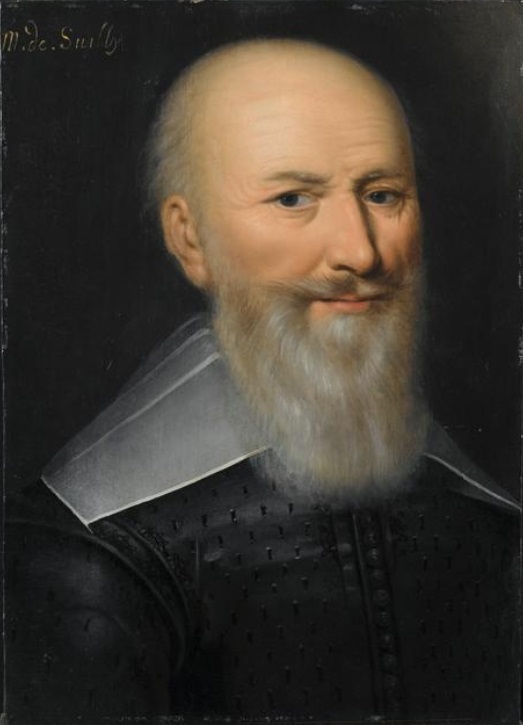
Portrait of Maximilien de Béthune, Duke de Sully Unidentified painter, Public domain, via Wikimedia Commons
The image I’ve included here is the Duke of Sully, a French Protestant courtier and advisor in the court of Henry IV of France, also known as Henry the Great. You might wonder why I’ve included him here, in the Lennox blog. The answer is that his memoirs (a set of five volumes describing most of his service to Henry IV and that king’s support of Protestantism) were translated into English by Lennox from L’Ecluse’s French edition of Sully’s memoirs (published 1745). Her translation was published in 1751. Lennox’s translation of Sully remained steadily in print for over 100 years after its original debut, making it possibly the most popular of her works (and very nearly the one with the most extant copies — the result remains to be definitively determined.)
I don’t know whether Lennox expected the result of her translation efforts on Sully. Certainly translations of the period didn’t often advertise who the translator was, and neither did the first few editions of Sully. She came to be closely associated with this work, however, and before long was featured as translator on the title pages of the various editions. This alone was not the biggest reason to include Sully in this post, however. I am including him because I feel as though I am chained to him through long familiarity, consisting largely of how long I’ve been working on entering copies of her translation of Sully into my database.
For the record, as of today I am still on map 1 of 3 of extant copies in terms of inputting data, and I’m already at over 300 records with a total of 5 different editions that I’ve worked with so far. I have not yet entered the raw data from The Female Quixote, but I can say that the total number of volumes of Henrietta that I’ve located (pre verification) is only 134. I expect that this will be well over 1000 copies by the time I’m done. It’s in the running to be Lennox’s most popular work, bar none, in terms of the sheer number of editions AND in the number of copies that have been preserved. I’m still so early on in this project that I’m hesitant to form any declarative statements regarding analysis, but what I can saw without fear of contraditions is that there are a whole whacking lot of Lennox’s Sully books out there, and I’m looking forward to seeing more of them in person someday.
Current Data Category:Memoirs of the Duke de Sully translation # of entries in this category to date: 324 # of entries in the database so far: 876 and counting
This month has seen a slowdown in work, in keeping with a rise of effort for the day job. Midterm grading is fast approaching, so I’m trying to stay caught up and yet still keep my hand in here. Also, it’s grant/fellowship application time for next year and I’ve got a job search to attend to, so we’re definitely keeping busy trying not only to keep this year’s ducks in a row, but obtain some ducks for next year as well.
That being said, things proceed apace. I’m at a total of 435 entries in the extant copy database, with two of the most populous and reprinted Lennox works yet to go. Preliminary data from my first special collections trip to Penn State has indicated a couple of interesting things, one of which is that Harrison & Co., publishers of Novelist’s Magazine in the late 1780s, may have simply taken extra copies of the novels reprints for their magazine (or vice versa), stripped off or reprinted the title pages, and bound them up either with other short works that met a given page/signature limit OR with the works that came after them in the magazine sequence, then sold them as standalone volumes. I have not yet been able to make a direct comparison between the bound volumes of the periodical and the novels, regrettably, but I think it’s entirely possible based on the similarities of paper, size, and typeface in their published works. I’m sure once I get past midterms, I’ll have more news. Until then, dear Reader.
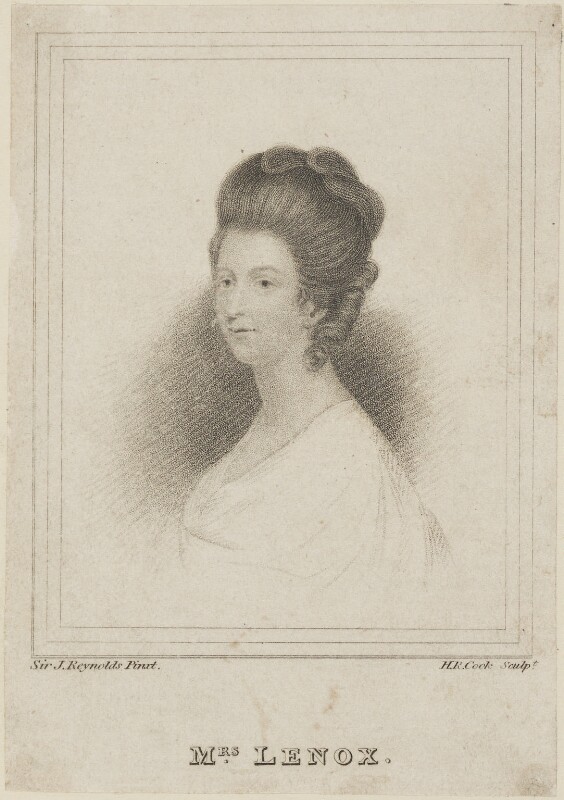
The Charlotte Lennox Bibliography Project is planned to be an open-source born-digital descriptive bibliography that focuses on the work of Charlotte Lennox (1729-1804). Charlotte Lennox was one of the most famous women authors of her day; she wrote poetry, novels, plays, and essays, translated works on political science and history, classical theater, and published a periodical specifically aimed at women. Her proto-feminist leanings are clear with her focus on women’s education, intelligence, self-sufficiency, and potential. While there has been a rediscovery of her work and resurgence of interest in her novels, the scope of her creative efforts and breadth of contemporary interest in her publications, whether as author or translator, has remained largely invisible. This project seeks to remedy that and provide a source for future scholars of Lennox’s publications.
This blog serves as the public-facing starting point for this project, which will be an ongoing concern completed in stages. The first step, Stage 1, is determining the location of extant copies of her work published between 1747-1850, when interest in reprinting Lennox’s work decreased significantly. Stage 2 will focus on both examining copies and building an archive from the data gained, as well as determining the parameters for the online interface. Stage 3 will focus on the collation and interpretation of that data. The goal is to continually add to and update the bibliography over time so that usable information is available as soon as possible, even if the whole of the data is not yet complete.
The author of this project, Michelle Lyons-McFarland, is currently a full-time lecturer at Case Western Reserve University in Cleveland, OH, teaching professional and technical communication for engineers. She received her Ph.D. in 2018 from Case Western Reserve University, with research focuses in Eighteenth-Century Literature and Composition. In addition to teaching, Michelle is a tech editor for Digital Defoe, the online annual journal of The Defoe Society, and acted as a reviewer for the Year’s Work in English Studies from Oxford UP from 2019-2021.

 Lennox Bibliography Project