Or; why does our author ever expect to get anything but grading done in the last quarter of the semester, a tale of Great Expectations but Very Little Actual Progress. offered for the Public Good and General Scholarly Edification
Much as I wish I had progress to report, I have none — this is the season of Writing Feedback, and I am up to my eyeballs in thesis statements and argumentation, or at least attempts at these things. December should be much more fruitful. In the meantime, to all my readers and friends, happy USA Thanksgiving and holiday season ahead.
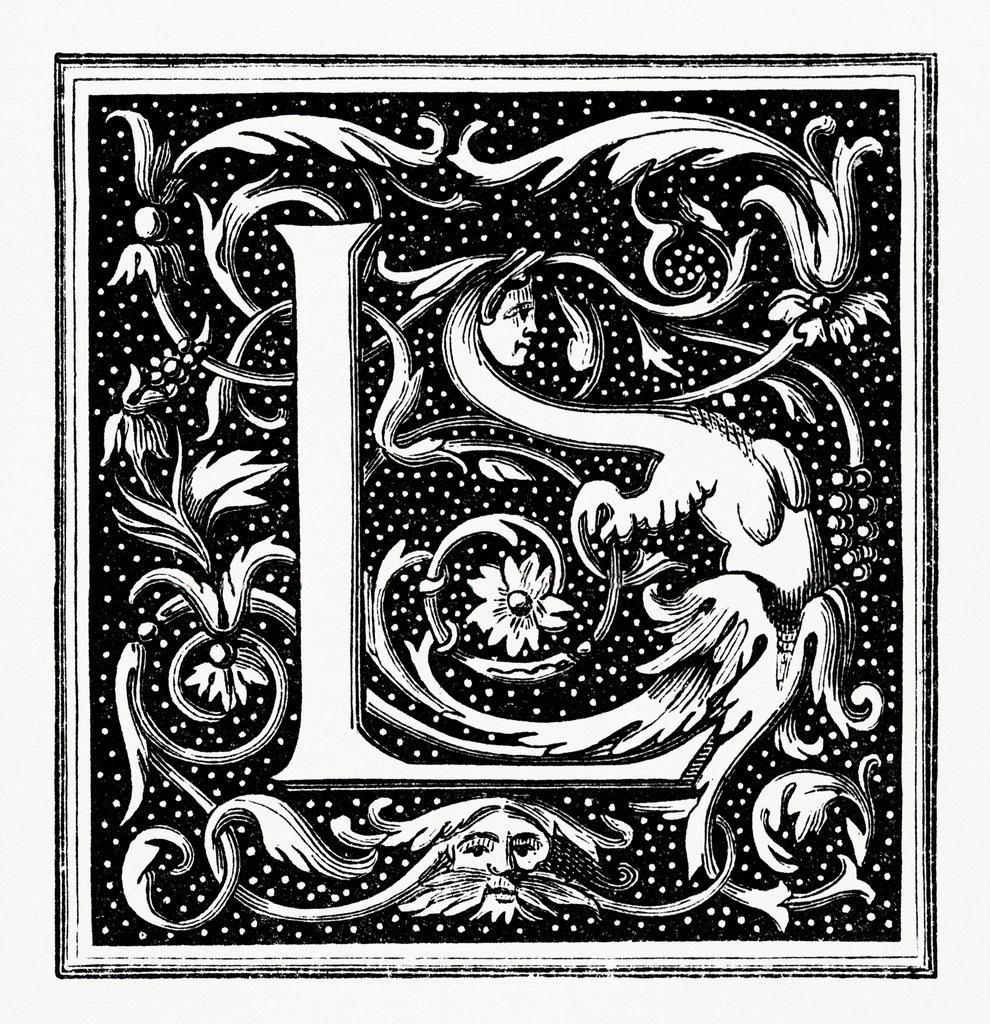
Greetings, gentle reader! I’m not 100% sure what’s happening in the background of the letter G, but clearly she is not escaping death despite her status. A lesson for tyrants everywhere, methinks. But on sunnier thoughts, I completed the letter G!
Things I learned from G:
I should not have been surprised at how many institutional libraries are named after people named George, and yet here we are.
I will also need to spend some time in Germany, because as Norbert Schurer noted, the Germans were seriously fans of Lennox and published possibly the most translations/non-British editions of her work of any country, during her lifetime at least. There are also multiple German editions of her plays, which is really exciting.
Most unusual libraries on the list: the Tyron Palace library in North Carolina, and Gladstone’s library in the UK. Like, I am so excited to make that trip! And the volume they have is one of her harder works to find — her translation of Meditations and Penitent Prayers by the Duchess de la Valliere.
I have no reason to suspect that I will keep up this streak and finish H in August, though I will make progress. For one, I’ve got gallbladder surgery scheduled for the first week in August, and other than that, it’s the run up to the semester. Also, H has a lot going on with it — some big collections in there.
Number of libraries confirmed: 207 Number of libraries entered into the database: 2 Number of extant copies confirmed: 746
Greetings, gentle reader! The heat dome is upon us, and it sucks a whole lot, but I am pleased to announce that I have finished the letter F!
Things I learned from F:
I’m going to need to spend at least a month in France one of these summers. The National Library of France has so many editions and translations that I just don’t easily have access to here in the US.
The Fondren library at Rice, the Folger, and Princeton’s libraries are all must visits (Princeton is in this section because of listings in the Firestone library, which leads into the next point).
I’ve finally come to the conclusion that, because my info about which books are where within an institution with multiple libraries is a bit suspect, I really need to just group institutional holdings together, with rare exceptions (such as the Lewis Walpole Library and the Beinecke). So I’m finding separate sections I have for an institution and pulling them together, since they’re usually in the same catalog. This also went for the Five Colleges consortium, since they all share the same library catalog system.
The good news is that G is going to be short. H, however, is going to take quite a while given the Harry Ransom Library and the Houghton, for examples. In the meantime, I have been trying to pick out the readings I checked out of the library. I’m starting to sort of coalesce on an idea for moving forward, but I’m not entirely there yet.
Number of libraries confirmed: 184 Number of libraries entered into the database: 2 Number of extant copies confirmed: 688
Greetings, friends! It has been an eventful spring, what with *gestures at the entire landscape of the United States* all this going on. Also, in April, with two weeks of the semester left, I managed to get sick and break a rib from coughing. I am well and recovering, but I certainly can’t recommend the experience. That being said, I am making progress again! I have finished with the letter “E,” which feels like forward momentum.
Things I have learned from E: First (still, again), my initial forays into WorldCat feel as though when there were multiple libraries at an institution, they simply picked one out of the bunch and assigned it to that one if not otherwise specified. Now, some of this could be that my data set is a little older, and things do get moved around — into and out of storage, deaccessioned, whatever. But the sheer number of entries that are elsewhere (for example, holdings listed at various NYPL branches rather than at the Schwartzman location, which is apparently where most all this stuff I’m looking for actually lives) is too high to be altogether attributable to changes over time.
Second (and this is more of a personal pet peeve), the number of entries that suggest Johnson did the actual writing/translation for Lennox is more pervasive than I’d really realized and also deeply annoying. I have a great admiration for Samuel Johnson, but he frankly didn’t have the bandwidth to have written the better part of Lennox’s work in addition to his own, even if we ignore issues of style, content, and consistency. One more thing to work on, I suppose.
Third, I need to get busy determining what info I really want and how I’m going to present it. I’m doing more reading this summer on descriptive bibliography in general and trying to build up my library so I can make informed choices. We’ll see what we can find. I’ll keep the blog updated as I make decisions, naturally.
Number of libraries confirmed: 165 Number of libraries entered into the database: 2 Number of extant copies confirmed: 554
Happy New Year! After a break that took me through the last quarter of last year, I am back pushing at my data verification boulder once more. As you might be able to tell from the image above, I am finished with the letter D. D contains 100 verified entries, which I mention primarily because it’s such a conveniently round number. Particular highlights include the UNC-Chapel Hill Davis library, the Detroit Public Library, Duke University library, UCSB and UC-Berkeley, The Royal Danish Library, and (unexpectedly for me) The Biblioteca de Catalyuna in Barcelona, Spain.*
Number of Libraries Confirmed: 149 Number of Libraries Entered into the Database: 2 Number of Extant Copies Confirmed: 618
*Do note that when we’re talking large library systems, often times the library I wrote down initially is not where the thing is actually housed, or it’s in special collections inside the library at large, or it’s off in storage somewhere, so for now this bit of data is still slightly wibbly. The existence of the books is confirmed, though, and that’s the important thing.
Hello, friends. My apologies for the short note here (and for missing September entirely). Between dodging burnout and having Covid for the first time, this project has been temporarily back-burnered. I expect that by the end of the year I’ll be working on it again with a bit more oomph, but I frankly needed the break. I have progressed a bit on “D” but I haven’t finished the letter yet. For November I’ll post statistics again and get things moving, but for now I just wanted to touch base and note that I haven’t abandoned the project or forgotten to update. I’ve just been a bit snowed under, and I’m looking forward to that letting up. Good thoughts, friends.
Happy holidays, gentle readers! I hope this season finds you reasonably well, at least on a local level, given the general setting of GAAAAAH globally at the moment. I myself have been digging deep into work and family and friendship as a sustaining focus for the past two months, hence the lack of distinct November update.
I had the good(?) news that I’m teaching both an extra class in the spring and a class online in the summer (assuming it fills), which on the one hand, yay! My car approves this decision. On the other hand, prep and grading and whatnot have largely eaten my ability to focus on Lennox work, so I’ve decided to let this lie fallow for the holiday season while I work on clearing my plate for the coming year. In January, therefore, I’ll be picking back up with the project work as normal. I hope to have new progress to update next time around.
For now, however, I hope that whatever you celebrate, you are able to take a moment to yourself and acknowledge the dark and light, the turning of the year and the brightness inherent in the human spirit even when things seem hopeless. May we all have a brighter 2024.
Greetings, gentle readers! September finds me pushing forward still, albeit a bit more slowly due to general life issues and a lot of time dedicated to sorting through the works housed at the Beinecke Rare Book and Manuscript Library at Yale. Needless to say, we’re going to have to spend some time there in the future, to no one’s surprise.
I currently have 30 libraries verified, having removed two or three so far that ostensibly had only a couple of items at most, and they turned out to either simply not be there, to belong to an affiliated library on the same system, or to be online or microfom versions of the work. I am looking at applying to the Lewis Walpole Library Fellowship this year, along with perhaps a local fellowship that might cover some gas money for libraries near to hand.
Number of libraries confirmed: 34 Number of libraries entered into the database: 2 Number of extant copies confirmed: 148
Greetings, gentle readers! The end of Hot Data Summer is upon us, and I have nearly finished all my class prep for the next semester’s teaching. Around and among and before that, I’ve been busily embarking on Phase 2.2 of the project, which as stated in July’s update, involves breaking out the data by library/institution (it depends on the nature of the organization and its libraries — there’s a system, I promise) and verifying holdings via catalog searches and/or contacting the library directly in some cases.
Thus far I’ve completed a mere twenty libraries, but that’s still served to provide some interesting insights. I have eliminated some prospective holdings (either they don’t exist or were online access only), but I’ve uncovered at least as many that simply weren’t in ESTC or Worldcat when I used it, for whatever reason. I knew there would be missed volumes, so that isn’t that surprising, but the number and type of them is still intriguing. As an example, an early data point (we’ll see if it holds) is that out of those 20, six libraries have multiple pre-1850 editions of the Memoirs of the Duke of Sully. What does that mean? I’m not sure, but it’s something to ponder and look into further if it holds up.
As far as the database design goes, I’ve put it aside for the moment. I could, in theory, enter holdings in as I confirm them (almost certainly a good idea, now that I think about it) but I would like to get a bit more done in confirmation first, and then perhaps have phases of entering data as opposed to a more constant back and forth.
Number of libraries confirmed: 20 Number of libraries entered into the database: 2 Number of extant copies confirmed: 77
Here it is, the middle of May already. Where is the April post, you may ask? Well, the April post sadly went the way of the rest of my month of April, swallowed whole by the end of the semester and grading. I got nothing done on the project to speak of in April, though I did find my way into some interesting discoveries.
At the beginning of April/end of March, I attended the ASECS (American Society for Eighteenth Century Studies) annual conference, this year held in St. Louis. While I was there I went to a fantastic panel (okay, many fantastic panels) but this one in particular discussed a very interesting potential path forward for the Lennox project. This panel included a paper by Norbert Schürer (CSULB), who was discussing a digital humanities project being created using the Heurist platform — a customizable relational database system that was designed for Humanities research. The platform is free to use, hosted by the University of Sydney. It is based in MySQL, which means that it’s easy to export to somewhere else for hosting or other purposes, and it’s going to be simple to transfer to new homes and interfaces down the line. It can also generate a website interface and has mapping and network visualization capabilities.
No one else has, up to date, used the platform for a descriptive bibliography, so a lot of the relationships and information types I need for my project do not yet exist. Before I start putting in extensive book data, however, I want to take the information I do have and create a locational database that takes the map data sets I’ve created and pulls it together for more effective research planning. To that end, I’ve created a test database and been futzing around with it in my spare time, which has not been terribly plentiful over the past month but should ease up considerably over the summer.
I was torn for a time on how to proceed, as it might be less time consuming simply to switch over to inputting data into the database directly. I think I’ve decided, though, to continue putting entries into the spreadsheets for now while I try to figure out the structures I need in Heurist and build something useful. To that end, I’ve started inputting data again and am nearly done with the Marquis de Sully, which is a relief. I’ll keep you posted on how it all goes.
Current Data Category:Memoirs of the Duke de Sully translation # of entries in this category to date: 953 # of entries in the worksheet so far: 1505 and counting