
Hello, friends. My apologies for the short note here (and for missing September entirely). Between dodging burnout and having Covid for the first time, this project has been temporarily back-burnered. I expect that by the end of the year I’ll be working on it again with a bit more oomph, but I frankly needed the break. I have progressed a bit on “D” but I haven’t finished the letter yet. For November I’ll post statistics again and get things moving, but for now I just wanted to touch base and note that I haven’t abandoned the project or forgotten to update. I’ve just been a bit snowed under, and I’m looking forward to that letting up. Good thoughts, friends.
Tag: 2024
State of the Project, August 2024
Greetings, Gentle Reader!
Today’s post is brought to you by The Letter C, as they say on Sesame Street. This is because I have finally finished with the “C” libraries in my list! Hooray!
I mean, seriously. I had no idea of the undertaking “C” was going to be when I started. It wasn’t the best of times or the worst of times, but it was a lot of times, of that there is no question.
Of particular note, but in no particular order:
- The number of institutions whose libraries are named, simply, “Central Library.” Really, while I admire the simplicity, you could differentiate yourselves a bit more.
- Cambridge. I got through a first pass that I think is complete, but I will be revisiting it just to be sure.
- Honorable mention to College Library at the University of Wisconsin, Madison. You have way more useful volumes than I realized when I started this, AND you’re within a relatively reasonable driving distance. Looking forward to visiting you eventually!
- Also, the Library of All Souls College at Oxford goes into the Oxford pile along with the Bodleian Library (and other Oxford libraries) to be sorted through more thoroughly at a later date. — Edited to note: this library was in “C” because my earlier research showed it was named the Codrington, but that name was changed in 2020. Guess OCLC/WorldCat hadn’t updated their records yet when I did my research.
Also, just for the record, I know I missed my July post. I meant to post my update, but then I posted June late and I was teaching and then before I knew it we were already at August, so… yeah. So be it. It’s okay. The victory over the significant number of C-entries more than makes up for it, to my mind. No worries. On to a new semester.
*Number of libraries confirmed: 116
Number of libraries entered into the database: 2
**Number of extant copies confirmed: 518
*Waiting on confirmation from Connelly Library at La Salle University. Their search seems to be limited to those attending/working at the university. Have emailed for more info.
**Not counting University of Oxford
State of the Project, June 2024 (-ish)
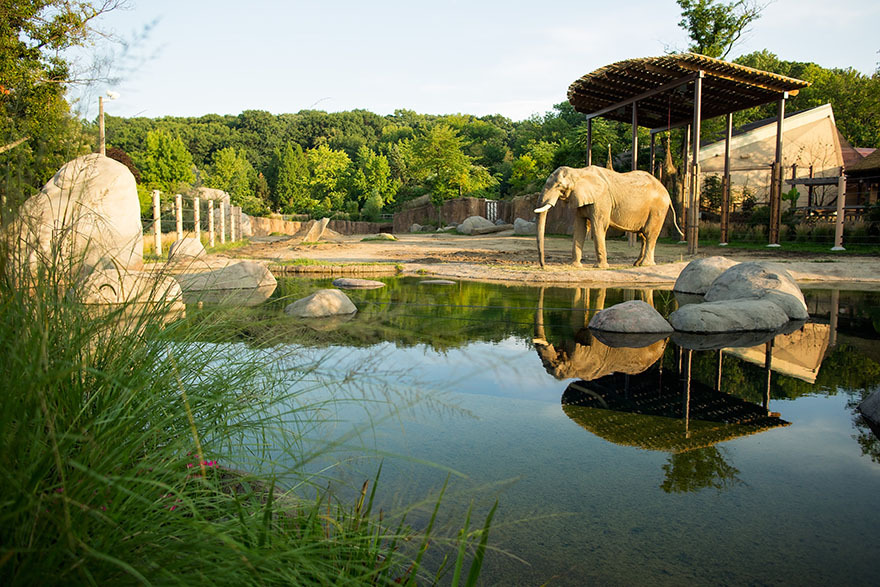
Today’s picture is appropriate because I went to see the elephants this morning at the Cleveland Zoo — it’s a fantastic habitat and the park is wonderful. Just a reminder to get out and see the wildlife and support your local zoological park’s conservation efforts. The world may be on fire, but animals don’t care about politics (and it’s one of the areas where we can actually make a difference).
Anyway, to the latest project news. First, I haven’t been working as hard as I could have, but I’m also teaching, so… yeah. A girl’s got to be able to play PS5 sometimes, after all. That being said, I have made some progress this month. I have not visited libraries as I’d hoped, but I am making some contacts and working on setting up my categories for the eventual bibliographical data. In the meantime, I’ll keep plinking away at it (I’m almost done with libraries that start with “C”).
Number of libraries confirmed: 93
Number of libraries entered into the database: 2
*Number of extant copies confirmed: 448
*Not counting Oxford University
State of the Project, May 2024
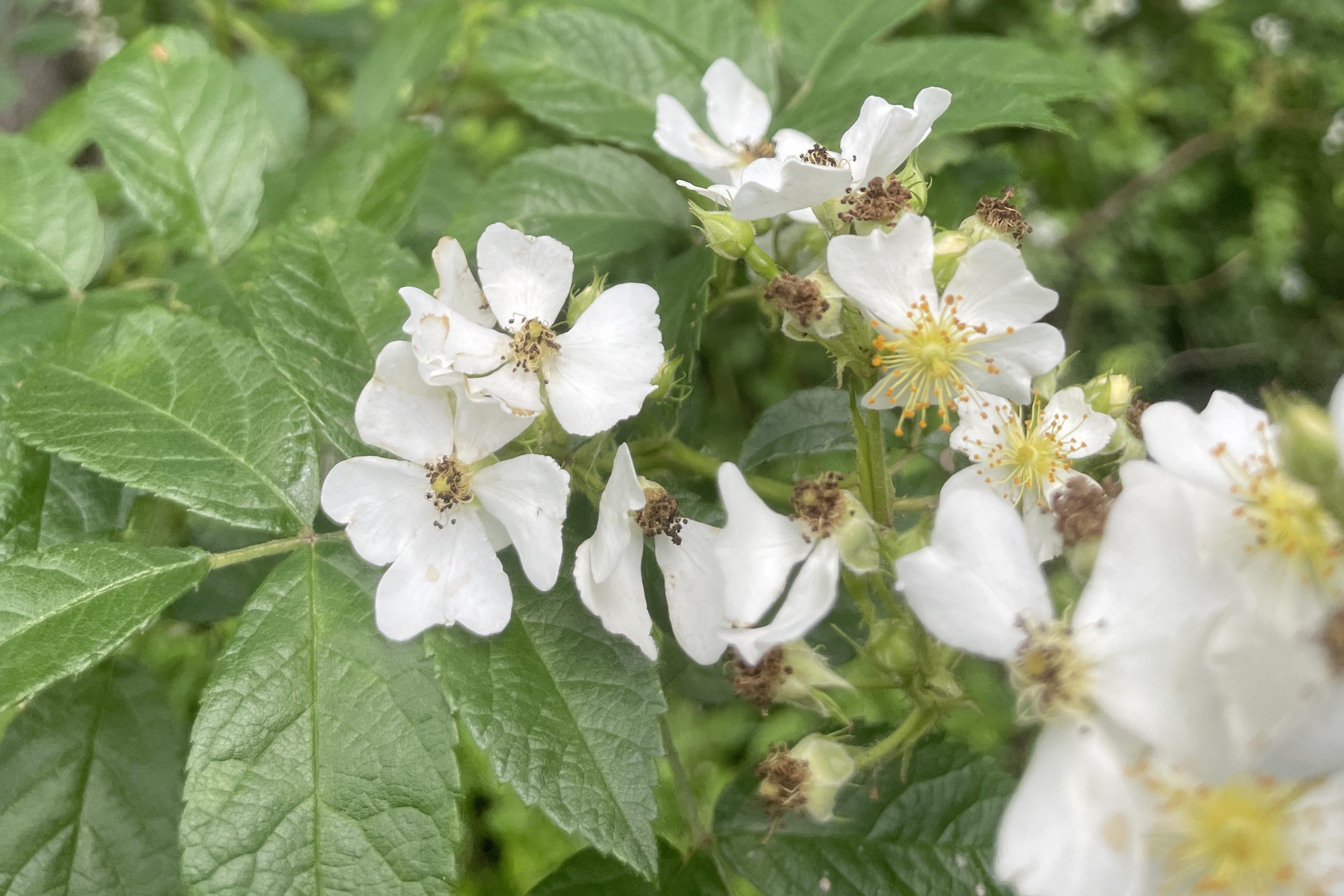
Wild white roses from my backyard (which I just learned are invasive). Alas.
Welcome back, gentle readers! Now that the semester is over (or hopefully nearly so) I hope the summer is treating you kindly and providing needed rest and relaxation. As for me, I start teaching an online evening class next week that I am not quite done planning for, but I will be by the time we get to it.
I’m also thrilled to announce that I had my first book review published! I had the pleasure of reviewing Stephen Ramsay’s On the Digital Humanities: Essays and Provocations in ABO: Interactive Journal of Women in the Arts, 1640-1830. It was a relatively painless process, and the staff were communicative and gave excellent feedback — I’d be very happy to work with them again in the future.
As to the LBP, I’m happy to announce that I’m back to it. I’ve been verifying libraries and titles (Cornell’s Rare and Manuscript Collection, we’re going to be spending some time together in the future). I’m debating putting in for the Lewis Walpole Library Fellowship for next year — they don’t have a huge number of books I need, but the ones they have are significant and I should be far enough along by then to make use of it. My goal for the summer is to make some real headway in verifying content and to make some initial rough passes at some local copies and make decisions about how the data is going to work for the actual bibliography portion.
Number of libraries confirmed: 74
Number of libraries entered into the database: 2
Number of extant copies confirmed: 367 (not counting anything at Oxford)
Data schema, Phase 1
When I was at ASECS 2024, I got a question after my presentation about how I was organizing my data. I was thinking he meant how I was setting everything up overall, for example what schema I was going to use, and I sort of only half answered him because I don’t entirely know what I’m doing for the overall project. I have realized, however, that I complicated the question far more than it required. I also realized that wasn’t something I’d talked about here, and it likely should have been. I feel very strongly that transparency in what and how and why is important — a belief that was strengthened after a really strong presentation from the great scholars behind the Women’s Print History Project about the need for DH documentation that discusses the “why” as well as the “how.”
As I’ve mentioned before, this is a project with multiple phases. Phase One involved using OCLC Worldcat and the ESTC to locate individual copies and possibly previously missed or spurious publication information. I started with the excellent list of Lennox publications in Charlotte Lennox: An Independent Mind by Susan Carlile, which gave me a huge headstart. That’s where the maps on this site came from — an early effort to identify locations and see where clusters of copies might have been located. The limitations of Google Maps, though, specifically in the number of points per map, made this of limited usefulness. I may yet go back and try to dump all of it into something like Tableau and get a master map, but I haven’t yet. Probably not until I’ve finished cleaning up the data set.
There was then an interim stage I consider Phase 1.5, in which I took the data out of Google Maps and put it into an Excel spreadsheet. The data as it stood was in the following categories:
- ID #: this helped differentiate records so I could move them into a relational database eventually
- Longitude: location info courtesy Google Maps
- Latitude: location info courtesy Google Maps
- Library Name: the name of the library with the holdings (preferably not just the special collections dept)
- Description: intended to describe something about the book, such as edition # or suspected piracy, not the library
- Affiliation: what institution is the library affiliated with, if any
- Designation:(what sort of library/institution is it — this is the muddiest category because sometimes it refers to the library (unaffiliated) and sometimes to the institution (affiliated)
- Pub Year: publication year
- Location: where was the book published
- Bookseller: who was the bookseller/publisher
- Title: Title of the book/periodical
Now, as to why I chose to keep track of all this stuff, particularly about the institutions, part of it was because I thought it would be interesting to track this and see how the spread went. Part of it was because I thought it would help me track down funding to visit collections. And the last part of it, I think, is because I didn’t want to go back and add it in later in case I regretted not having it to begin with. It’s easier to cut info than to go back and add it in across all the records.
I’ve held to that philosophy as I’ve gone — I’d rather get all the information plus some and end up with something unnecessary than I would want to record less than I’d end up wanting. There is absolutely a point of diminishing returns, here, naturally, but it’s balanced by the realization that, for most of these copies, I will get only one bite at the apple. If I miss something or realize later what I needed, I may be able to get it by asking the librarians, but I likely won’t get a second visit to see it for myself. This is one reason that my local copies are my test cases, to ensure what information I’m recording and why before I start trying to build my photo album of all the special collections rooms I get to visit.
I hope this proves helpful to someone — I’m happy to provide more information or answer questions as needed. I’ll move toward describing Phase Two in an upcoming post.
State of the Project, March 2024
Greetings, Gentle Readers! Welcome to the Lennox Bibliography Project website’s second birthday! *blows noisemaker* I’m thrilled and amazed that I’m still working on this and that I’ve actually made progress, albeit more slowly than I would have liked. Still moving forward, though.
Again, this month has seen a ton of grading and not much in the way of progress. What it has also seen, however, is me prepping my presentation for the upcoming ASECS 2024 conference! Starting later next week (eep) I will be in Toronto, ON with a bunch of other 18th-century scholars and doing my part to further the (small-d) discourse in our field. For those in attendance who might be interested, I’ll be presenting on some of my findings thus far from the LBP.
Specifically, I’m on panel #112, Friday April 5th, from 4:30-6:00pm in the Elgin room. It’s the second of two panels from the Bibliographical Society of America, titled “Bibliography by the Numbers: Meta-Bibliography and the Study of Eighteenth-Century Book Culture.” My paper is titled (not terribly creatively) “The Travels of the Memoirs of the Duke of Sully.” Belatedly I realized I should have named it “So Many Copies: Charlotte Lennox and the Duke of Sully” but alas, inspiration came far too late. Feel free to stop by!
State of the Project, February 2024
Welcome back, Readers! I have returned from my research “vacation,” for certain values of “returned” anyway. I am still teaching the overload situation this semester, but it’s going well and I feel like I’m mostly not drowning at this point. I am only now resuming work on the project, though. It’s been a good time to take a break and I feel much more able to bring my attention back to it in a positive and constructive way.
One of the things this break brought home to me is how I’ve basically worked on this non-stop for two years at least, prior to the beginning of this past holiday season. It’s so easy to get caught up in the work, particularly when it’s something that we’re interested in and want to see happen, that we can fall victim to our academic training of “never stop working” and forget that sometimes it’s good to let the fields like fallow for a bit.
I’m not saying that everyone is always in a situation where that’s feasible, or necessarily even desirable — we all have our own relationships to our work and research. One of the things I’m discovering on my own career journey, though, is the inexorability of erosion. Time, familiarity, training, and anxiety all wear away at our boundaries, our self-images, our work-life balance, and our storehouses of resolve and empathy. It takes active work to shore up those borders and keep ourselves whole and healthy. Much like the mansions on the hilltops in California now being undermined by landslides and erosion, with the ground beneath them slipping away into the ocean, we’re similarly at risk of being washed out and ground down to nothing. The world, your institution, your research, your students — none of them will tell you to stop when you’re already spread thin.
I know I’m not saying anything really new here. The thing that really hit me, though, is that although I do want to push forward and I’m excited about where this project is going to go, I don’t have a clock on this or a deadline I have to make. I don’t have to push for some external timeline that’s only in my head and sacrifice myself and my enthusiasm for this project in the process. Pacing myself — taking breaks — is a good thing. So for those following along in the background, I appreciate your patience and hope you bear with me during quieter times. I should have more progress to relate soon.
 Lennox Bibliography Project