State of the Project, September 2025

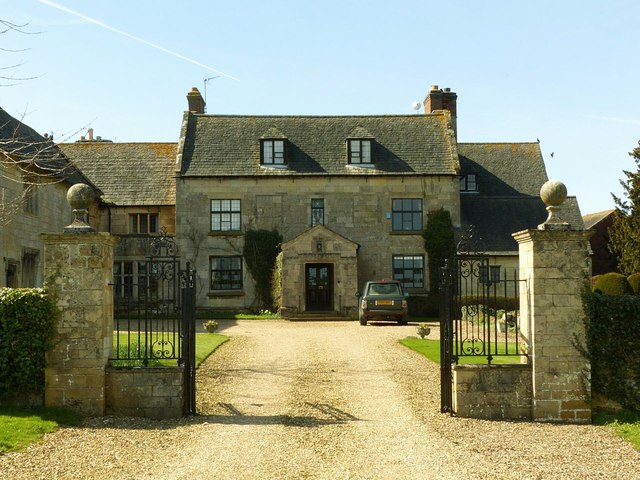
A color photograph of old eighteenth century British manor house, Ingarsby Old Hall. The camera is outside the gate in the driveway, facing the front door. The house is pale beige/dirty white stone/brick, three stories high and symetrical in the main house, with a wing off to the left. It is well kept and there is a small green car parked in front, facing the house.
Ingarsby Old Hall, The 18th century house by Alan Murray-Rust is licensed under CC-BY-SA 2.0

Greetings, gentle reader! Just as GBBO returns with a new season in the USA, so do I return this month with an update on the Lennox Bibliography Project. The world may be a searing hellscape with death, destruction, groypers, assassinations, the death of health insurance and job security in academia, but at least we’ve got a banging recipe for hobnobs I cannot wait to try. I went retro and made old-school, crossed-with-fork-marks peanut butter cookies this weekend, and I do not regret it in the least. That is not why you’re here, though. You’re here for an update! This baking celebration bit is brought to you in honor of the fact that I did, in fact, finish both I and J this past month! To the virtual bibliography tent!

Things I learned from I and J:

  • It was incredibly rude for John D. Rockefeller, Jr. to endow two libraries but name them both after himself.
  • The John Rylands Library at the University of Manchester has a surprisingly robust Lennox collection, much more so than I’d been led to believe by my earlier WorldCat searches.
  • The aforementioned strategy of combining multiple libraries at a single institution when I do the searches has turned out to be a much better strategy. Yay for process iteration!

Seriously, I feel as though I’ve hit a milestone, even though we are not halfway through the alphabet yet. In truth, I felt it so strongly that I did some checking. It turns out that while I may only be on the 10th letter, I’m very nearly halfway through the entries I have in the spreadsheet. I have just under 3100 lines in the sheet with info, and I’ve hit just over line 1550.

Now, there are some caveats to bit of data trivia — first, I’ve been adding blank lines between libraries to help block the data into groups and make it visually easier to track; second, not everything in the file exists, and some are in duplicates but I can’t know that until I track it down and verify it; and third, my newfound method of grouping multiple libraries at an institution means I’ve moved things around slightly as I get to a new place/encounter a place I’ve started before. I don’t really think this last point is statistically significant, but it does mean it takes me slightly longer to quantify my progress when I sit down to it.

Database Musings

In addition, now that I’ve hit something approximating midpoint, I felt my attention turning back to the Heurist database. It’s gone through some updates and improvements, and I’m very pleased with it overall. Still easy to use and enter data, but with new, easier to parse mapping capability, which is one of the things I very much wanted (and why I kept the library coordinates from Google Maps, so I could eventually see proximity data and plan out trips. Also because I think it’s cool). I also realized I was a little offbase about the number of entries I was quoting. I have two books and their locations in the database, not two libraries. I have 54 library entries thus far, with two new ones as of today.

That, of course, is not as simple as adding two records. For those of you familiar with relational database work, you probably know more than I do and can skip this part. For everyone else, in order to make this work, you can think of it as putting a bunch of different pegs on a pegboard, each for a different data point, and then using yarn to connect them. So for every book location, I need not only the info about the book, but about the library it’s in. For every library, I need the institution it’s connected to. Each library entry is therefore at least two entries, along with all the connections to be made and the mappable location entered. I’ve put off entering in more books until I get the library locations entered, at least as far as today’s plan goes. I may change my mind and start entering books again just to get the basic info in place and connections made.

Beyond that, I still need to decide exactly how I’m going to put information about the books — collation formulae, images, provenance, marginalia, as well as the standard bibliographic stuff. For most of Lennox’s work, this is not hugely problematic in terms of parsing out issue, edition, etc., at least not on the face of it. Most of her works didn’t go through too many printings/editions, and the ones that did often were either international, translations, or clearly post-1774/Donaldson v. Beckett reprints from different publishers, so the status of the edition is pretty clear. 1

Regardless, all of that has to be determined eventually. I know I’m heavily interested in individual issues and evidence of use of Lennox’s books, but I don’t want to shortchange the more traditional bibliographic data either. I also frankly need a refresher on determining all of it, because it’s been a hot minute since RBS and I’ve been busy doing other, more day job-related things. I’ll sort it out as I get closer, though. This is a marathon, not a sprint.

  1. This assessment does not, FYI, include the many and varied printings/editions/issues/whatever of the Memoirs of the Duke of Sully in its varied titles and incarnations. ↩︎

Number of libraries confirmed: 281
Number of libraries entered into the database: 54
Number of extant copies confirmed: 1038

State of the Project, July 2025

A block print of the capital letter G, with two skeletons dragging away a struggling queen behind the letter, presumably reinforcing the inescapability of death.
Letter G (c. 1523) Hans by National Gallery of Art is licensed under CC-CC0 1.0

Greetings, gentle reader! I’m not 100% sure what’s happening in the background of the letter G, but clearly she is not escaping death despite her status. A lesson for tyrants everywhere, methinks. But on sunnier thoughts, I completed the letter G!

Things I learned from G:

  • I should not have been surprised at how many institutional libraries are named after people named George, and yet here we are.
  • I will also need to spend some time in Germany, because as Norbert Schurer noted, the Germans were seriously fans of Lennox and published possibly the most translations/non-British editions of her work of any country, during her lifetime at least. There are also multiple German editions of her plays, which is really exciting.
  • Most unusual libraries on the list: the Tyron Palace library in North Carolina, and Gladstone’s library in the UK. Like, I am so excited to make that trip! And the volume they have is one of her harder works to find — her translation of Meditations and Penitent Prayers by the Duchess de la Valliere.

I have no reason to suspect that I will keep up this streak and finish H in August, though I will make progress. For one, I’ve got gallbladder surgery scheduled for the first week in August, and other than that, it’s the run up to the semester. Also, H has a lot going on with it — some big collections in there.

Number of libraries confirmed: 207
Number of libraries entered into the database: 2
Number of extant copies confirmed: 746

State of the Project, June 2025

Greetings, gentle reader! The heat dome is upon us, and it sucks a whole lot, but I am pleased to announce that I have finished the letter F!

Things I learned from F:

  • I’m going to need to spend at least a month in France one of these summers. The National Library of France has so many editions and translations that I just don’t easily have access to here in the US.
  • The Fondren library at Rice, the Folger, and Princeton’s libraries are all must visits (Princeton is in this section because of listings in the Firestone library, which leads into the next point).
  • I’ve finally come to the conclusion that, because my info about which books are where within an institution with multiple libraries is a bit suspect, I really need to just group institutional holdings together, with rare exceptions (such as the Lewis Walpole Library and the Beinecke). So I’m finding separate sections I have for an institution and pulling them together, since they’re usually in the same catalog. This also went for the Five Colleges consortium, since they all share the same library catalog system.

The good news is that G is going to be short. H, however, is going to take quite a while given the Harry Ransom Library and the Houghton, for examples. In the meantime, I have been trying to pick out the readings I checked out of the library. I’m starting to sort of coalesce on an idea for moving forward, but I’m not entirely there yet.

Number of libraries confirmed: 184
Number of libraries entered into the database: 2
Number of extant copies confirmed: 688

State of the Project, August 2023

Photo by Luis Zheji on Pexels.com

Greetings, gentle readers! The end of Hot Data Summer is upon us, and I have nearly finished all my class prep for the next semester’s teaching. Around and among and before that, I’ve been busily embarking on Phase 2.2 of the project, which as stated in July’s update, involves breaking out the data by library/institution (it depends on the nature of the organization and its libraries — there’s a system, I promise) and verifying holdings via catalog searches and/or contacting the library directly in some cases.

Thus far I’ve completed a mere twenty libraries, but that’s still served to provide some interesting insights. I have eliminated some prospective holdings (either they don’t exist or were online access only), but I’ve uncovered at least as many that simply weren’t in ESTC or Worldcat when I used it, for whatever reason. I knew there would be missed volumes, so that isn’t that surprising, but the number and type of them is still intriguing. As an example, an early data point (we’ll see if it holds) is that out of those 20, six libraries have multiple pre-1850 editions of the Memoirs of the Duke of Sully. What does that mean? I’m not sure, but it’s something to ponder and look into further if it holds up.

As far as the database design goes, I’ve put it aside for the moment. I could, in theory, enter holdings in as I confirm them (almost certainly a good idea, now that I think about it) but I would like to get a bit more done in confirmation first, and then perhaps have phases of entering data as opposed to a more constant back and forth.

Number of libraries confirmed: 20
Number of libraries entered into the database: 2
Number of extant copies confirmed: 77

State of the Project, June 2023

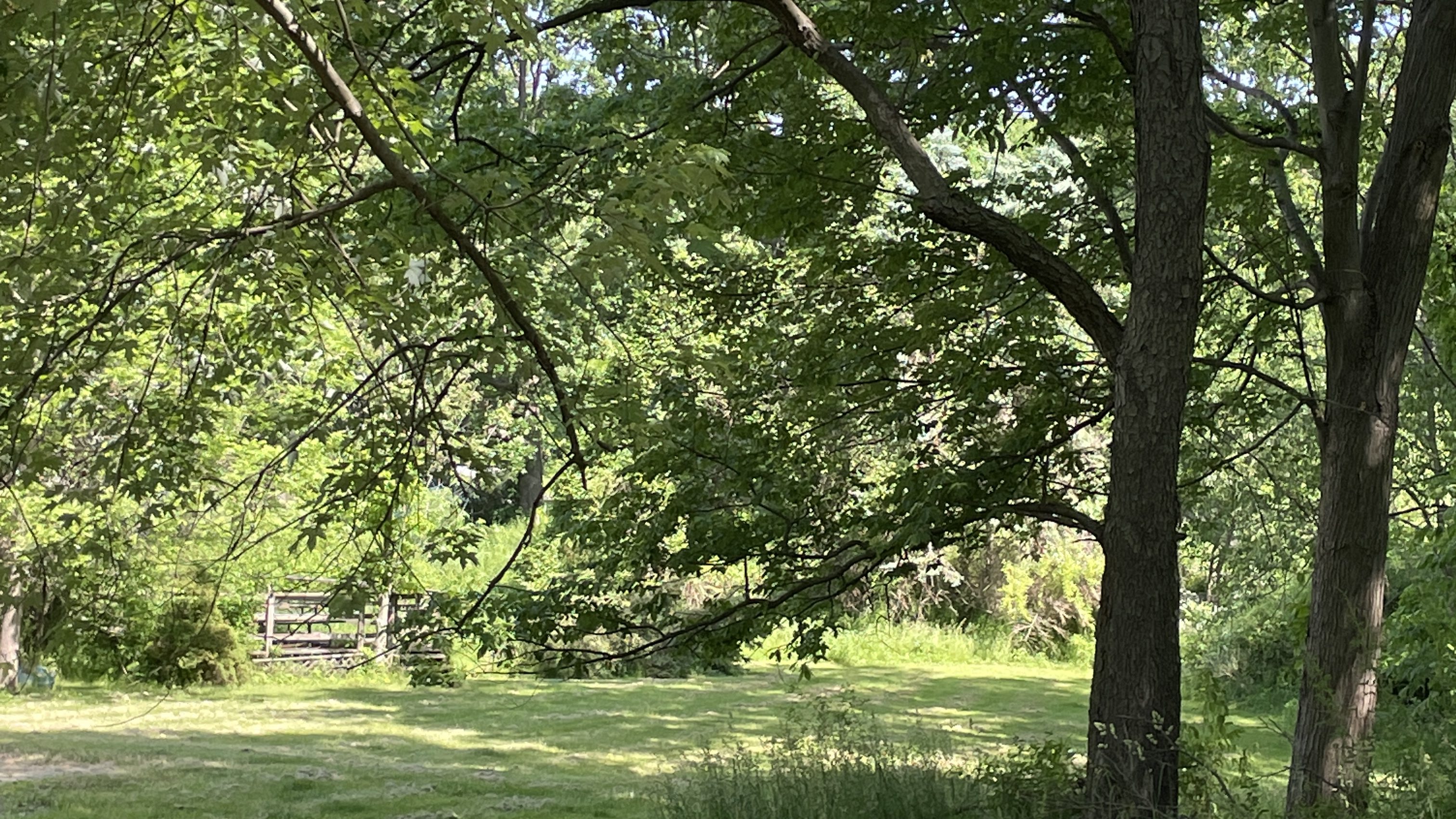
A green landscape, looking out from a shady wooded area into a sunlit yard, with a large statement tree off to the right side and a wooden fence in the distance.

The view from the back of my house

Greetings, gentle readers! The summer has almost returned, and I’m managing to make this post mid-month as opposed to nearly-done-month. Overall I’m quite pleased with my industry.

Insofar as the project goes, finishing the semester has done wonders for my ability to keep working on my data. I completed working on the Marquis de Sully finally and was able to likewise finish Old City Manners, Philander, Poems Upon Several Occasions*, and Shakespear Illustrated, the latter just this evening. I’m very happy with the rate of progress I’m making.

In addition to working through the data and cleaning it up, I’m currently trying to work through two different problems. The first thing I’m trying to sort out is regarding periodical reprints of Lennox’s work. I want to catalog not simply the stand-alone volumes of her works, but also the various reprints, both partial and complete, of her work in periodicals of the time. The problem is, how do I track them? Using the Lennox bibliography in Susan Carlile’s book, Charlotte Lennox: An Independent Mind, I have a list of excerpts in various publications.

The question, though is this: 1) is that actually all of them? and 2) (and this is a big one) how do I treat these periodicals within the same project as more traditional codex books? Lennox even had her own periodical, The Lady’s Museum. The same periodical may have (and in some cases does have) multiple samples from her various works across time. How do I record that data so that nothing is lost and yet I’m also not doubling my own effort? It’s not that this is a particularly complicated problem; it’s just that the solution I pick will necessarily inform the shape of the project as it goes, so I’d rather do my best to choose something that won’t cause problems later if I can.

The next issue, mostly unrelated to the above procedural quandary, is how to set up my database so that different records can have the same title without it being a gigantic mess. This is actually the easier one to answer, most likely, as I’m sure I’m not the first person building a relational data structure to have multiple entries with the same name, for example, but different data attached to each one. I’m working on doing some reading and I’ve got some feelers out with some data-oriented DBA people I know, and I’ll likely have an answer to this later this month. Once I do, I can keep working on the structure on my Heurist database and importing the material I’ve currently got in spreadsheets. In the meantime, I’ll keep working on the organization and getting the location data sorted, with the goal of being finished with it and organizing the next phase of the project by the fall, aka library fellowship application season.

Current Data Category: Shakespear Illustrated
# of entries in this category to date: 126
# of entries in the worksheet so far: 2140 and counting

State of the Project, February 2023

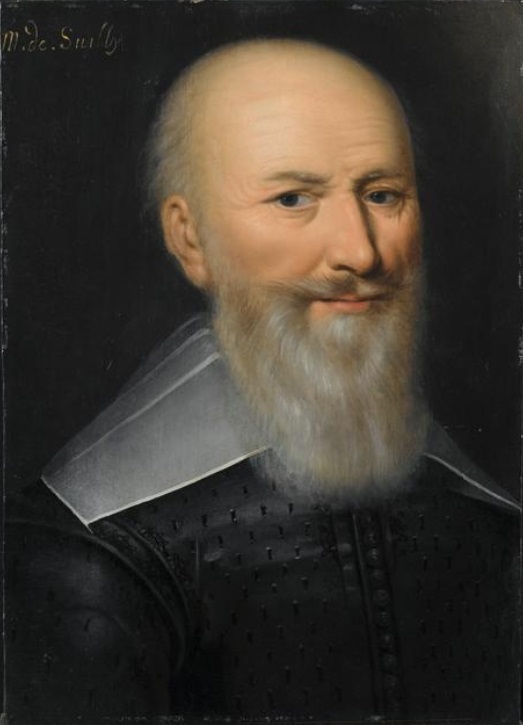
A portrait of Maximilien de Béthune, the Duke of Sully (1559-1641). A balding man with a mustache and a well-kept long beard with a mix of white and light brown hair. He has dark eyes, a keen gaze, and is wearing a starched white collar and black suit like a proper Protestant of his era.
Portrait of Maximilien de Béthune, Duke de Sully
Unidentified painter, Public domain, via Wikimedia Commons

The image I’ve included here is the Duke of Sully, a French Protestant courtier and advisor in the court of Henry IV of France, also known as Henry the Great. You might wonder why I’ve included him here, in the Lennox blog. The answer is that his memoirs (a set of five volumes describing most of his service to Henry IV and that king’s support of Protestantism) were translated into English by Lennox from L’Ecluse’s French edition of Sully’s memoirs (published 1745). Her translation was published in 1751. Lennox’s translation of Sully remained steadily in print for over 100 years after its original debut, making it possibly the most popular of her works (and very nearly the one with the most extant copies — the result remains to be definitively determined.)

I don’t know whether Lennox expected the result of her translation efforts on Sully. Certainly translations of the period didn’t often advertise who the translator was, and neither did the first few editions of Sully. She came to be closely associated with this work, however, and before long was featured as translator on the title pages of the various editions. This alone was not the biggest reason to include Sully in this post, however. I am including him because I feel as though I am chained to him through long familiarity, consisting largely of how long I’ve been working on entering copies of her translation of Sully into my database.

For the record, as of today I am still on map 1 of 3 of extant copies in terms of inputting data, and I’m already at over 300 records with a total of 5 different editions that I’ve worked with so far. I have not yet entered the raw data from The Female Quixote, but I can say that the total number of volumes of Henrietta that I’ve located (pre verification) is only 134. I expect that this will be well over 1000 copies by the time I’m done. It’s in the running to be Lennox’s most popular work, bar none, in terms of the sheer number of editions AND in the number of copies that have been preserved. I’m still so early on in this project that I’m hesitant to form any declarative statements regarding analysis, but what I can saw without fear of contraditions is that there are a whole whacking lot of Lennox’s Sully books out there, and I’m looking forward to seeing more of them in person someday.

Current Data Category: Memoirs of the Duke de Sully translation
# of entries in this category to date: 324
# of entries in the database so far: 876 and counting

About the Lennox Bibliography Project

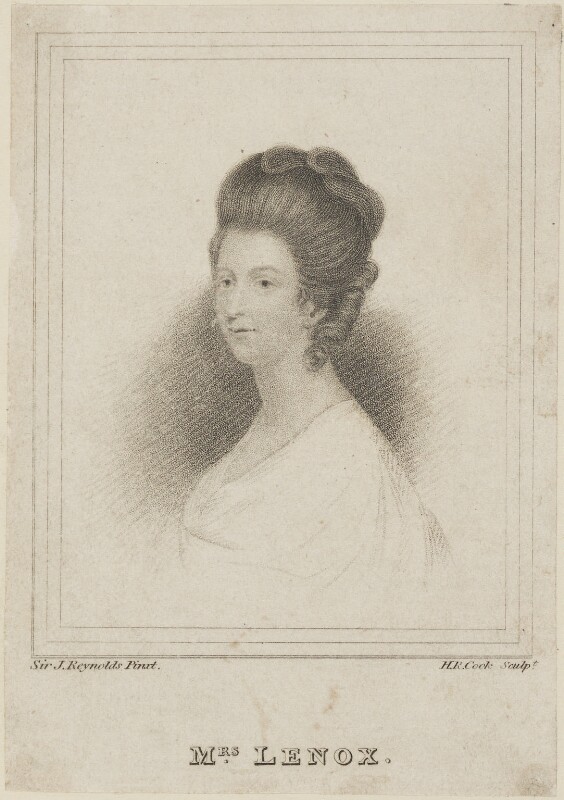
Charlotte Lennox (née Ramsay)
by Henry Richard Cook, after Sir Joshua Reynolds
stipple engraving, published circa 1793
NPG D14541
© National Portrait Gallery, London

The Charlotte Lennox Bibliography Project is planned to be an open-source born-digital descriptive bibliography that focuses on the work of Charlotte Lennox (1729-1804). Charlotte Lennox was one of the most famous women authors of her day; she wrote poetry, novels, plays, and essays, translated works on political science and history, classical theater, and published a periodical specifically aimed at women. Her proto-feminist leanings are clear with her focus on women’s education, intelligence, self-sufficiency, and potential. While there has been a rediscovery of her work and resurgence of interest in her novels, the scope of her creative efforts and breadth of contemporary interest in her publications, whether as author or translator, has remained largely invisible. This project seeks to remedy that and provide a source for future scholars of Lennox’s publications.

This blog serves as the public-facing starting point for this project, which will be an ongoing concern completed in stages. The first step, Stage 1, is determining the location of extant copies of her work published between 1747-1850, when interest in reprinting Lennox’s work decreased significantly. Stage 2 will focus on both examining copies and building an archive from the data gained, as well as determining the parameters for the online interface. Stage 3 will focus on the collation and interpretation of that data. The goal is to continually add to and update the bibliography over time so that usable information is available as soon as possible, even if the whole of the data is not yet complete.

The author of this project, Michelle Lyons-McFarland, is currently a full-time lecturer at Case Western Reserve University in Cleveland, OH, teaching professional and technical communication for engineers. She received her Ph.D. in 2018 from Case Western Reserve University, with research focuses in Eighteenth-Century Literature and Composition. In addition to teaching, Michelle is a tech editor for Digital Defoe, the online annual journal of The Defoe Society, and acted as a reviewer for the Year’s Work in English Studies from Oxford UP from 2019-2021.