State of the Project, October 2025

Greetings! This particular post is brought to you by the letter K (and about half of letter L). October is upon us –I’m already mad that the time change back to Standard time isn’t happening until the first week of November, as I can feel that it should be happening about now and it would be the least jarring for it to do so, but no, we have to wait until the first weekend in November because politics and candy lobbyists. Really, it just feels like adding insult to injury this year. There is too much argh happening, and the little bits I can do are not enough to fix any of it. If you feel similarly, you are not alone — keep at those little bits, though. Every tiny pebble helps build the mountain we need, no matter how small.

That being said, bibliography is comparatively a land of calm and sanity, unfazed by the cursed actions of tyrants and an impending lack of vitamin D. To our research we turn, therefore, as a welcome form of respite away from social media and the outside world. (Yes, my prose has gotten rather purple, but for this month at least we’re just going to work with it.) So, on to this month’s overview!

Things I learned from K:

  • To no one’s great surprise, I’m sure, I will be spending a decent amount of time at both the Kislak Library at University of Pennsylvania and Kresge Library at Oakland University. The latter in particular has copies of Lennox’s first book, Poems on Several Occasions (pretty hard to find), and Memoirs for the History of Madame de Maintenon, which is also fairly rare. Excited about both of those.
  • Not that many libraries that start with K, so the letter was shorter than I’d realized. I’d initially thought I might get through both K and L this month, but I forgot about midterm grading and so that plan did not come to pass. No big deal, though.

I have about 75 entries left in L, including the big one at the Library of Congress. Shouldn’t be a problem to get it done for the next update. We shall see! Also, I’ve started entering libraries into my database more intentionally. I may not know exactly what I’m doing with the books yet, but the locations I can build out now.

Number of libraries confirmed: 307
Number of libraries entered into the database: 58
Number of extant copies confirmed: 1156

State of the Project, August 2025

Greetings, gentle reader! Glad to see you once again. So the crazy news here is that I finished the letter H despite everything! (Or perhaps because of everything, honestly.) I’m frankly sort of amazed it happened, though. Perhaps it’s because there weren’t that many distinct entries, although there were some very big ones–Harvard’s libraries, the Harry Ransom Center, Indiana University (the Herman B. Wells Library led into the Lilly). Overall I’m pretty happy about my work so far.

Things I learned from H:

  • I have very strong feelings about catalogs that do not let you filter out microfiche from physical books.
  • I’m absolutely going to need fellowships to get through the sheer mass of works at Harvard and at UT-Austin.
  • There was apparently a Russian translation of Lennox’s play The Sister in 1788? I’ve only found it in microfiche in one place so far, but I’m suspending my “no microforms” rule for this one because I can’t find it anywhere else.

So “I” is really short, while “J” is a bit on the longer side due to the sheer number of high profile donors with “J” first names. It’s not bad, though. Coult September be the month with two letters? Stay tuned and find out!

Number of libraries confirmed: 241
Number of libraries entered into the database: 2
Number of extant copies confirmed: 893

State of the Project, July 2025

A block print of the capital letter G, with two skeletons dragging away a struggling queen behind the letter, presumably reinforcing the inescapability of death.
Letter G (c. 1523) Hans by National Gallery of Art is licensed under CC-CC0 1.0

Greetings, gentle reader! I’m not 100% sure what’s happening in the background of the letter G, but clearly she is not escaping death despite her status. A lesson for tyrants everywhere, methinks. But on sunnier thoughts, I completed the letter G!

Things I learned from G:

  • I should not have been surprised at how many institutional libraries are named after people named George, and yet here we are.
  • I will also need to spend some time in Germany, because as Norbert Schurer noted, the Germans were seriously fans of Lennox and published possibly the most translations/non-British editions of her work of any country, during her lifetime at least. There are also multiple German editions of her plays, which is really exciting.
  • Most unusual libraries on the list: the Tyron Palace library in North Carolina, and Gladstone’s library in the UK. Like, I am so excited to make that trip! And the volume they have is one of her harder works to find — her translation of Meditations and Penitent Prayers by the Duchess de la Valliere.

I have no reason to suspect that I will keep up this streak and finish H in August, though I will make progress. For one, I’ve got gallbladder surgery scheduled for the first week in August, and other than that, it’s the run up to the semester. Also, H has a lot going on with it — some big collections in there.

Number of libraries confirmed: 207
Number of libraries entered into the database: 2
Number of extant copies confirmed: 746

State of the Project, June 2025

Greetings, gentle reader! The heat dome is upon us, and it sucks a whole lot, but I am pleased to announce that I have finished the letter F!

Things I learned from F:

  • I’m going to need to spend at least a month in France one of these summers. The National Library of France has so many editions and translations that I just don’t easily have access to here in the US.
  • The Fondren library at Rice, the Folger, and Princeton’s libraries are all must visits (Princeton is in this section because of listings in the Firestone library, which leads into the next point).
  • I’ve finally come to the conclusion that, because my info about which books are where within an institution with multiple libraries is a bit suspect, I really need to just group institutional holdings together, with rare exceptions (such as the Lewis Walpole Library and the Beinecke). So I’m finding separate sections I have for an institution and pulling them together, since they’re usually in the same catalog. This also went for the Five Colleges consortium, since they all share the same library catalog system.

The good news is that G is going to be short. H, however, is going to take quite a while given the Harry Ransom Library and the Houghton, for examples. In the meantime, I have been trying to pick out the readings I checked out of the library. I’m starting to sort of coalesce on an idea for moving forward, but I’m not entirely there yet.

Number of libraries confirmed: 184
Number of libraries entered into the database: 2
Number of extant copies confirmed: 688

State of the Project, May 2025

Pink-purple flowering tree branches with sparse green leaves, all against a brilliant blue sky

Greetings, friends! It has been an eventful spring, what with *gestures at the entire landscape of the United States* all this going on. Also, in April, with two weeks of the semester left, I managed to get sick and break a rib from coughing. I am well and recovering, but I certainly can’t recommend the experience. That being said, I am making progress again! I have finished with the letter “E,” which feels like forward momentum.

Things I have learned from E: First (still, again), my initial forays into WorldCat feel as though when there were multiple libraries at an institution, they simply picked one out of the bunch and assigned it to that one if not otherwise specified. Now, some of this could be that my data set is a little older, and things do get moved around — into and out of storage, deaccessioned, whatever. But the sheer number of entries that are elsewhere (for example, holdings listed at various NYPL branches rather than at the Schwartzman location, which is apparently where most all this stuff I’m looking for actually lives) is too high to be altogether attributable to changes over time.

Second (and this is more of a personal pet peeve), the number of entries that suggest Johnson did the actual writing/translation for Lennox is more pervasive than I’d really realized and also deeply annoying. I have a great admiration for Samuel Johnson, but he frankly didn’t have the bandwidth to have written the better part of Lennox’s work in addition to his own, even if we ignore issues of style, content, and consistency. One more thing to work on, I suppose.

Third, I need to get busy determining what info I really want and how I’m going to present it. I’m doing more reading this summer on descriptive bibliography in general and trying to build up my library so I can make informed choices. We’ll see what we can find. I’ll keep the blog updated as I make decisions, naturally.

Number of libraries confirmed: 165
Number of libraries entered into the database: 2
Number of extant copies confirmed: 554

State of the Project, August 2024

A black block print on a blue background of an illustrated capital letter "C".
The letter C!

Greetings, Gentle Reader!

Today’s post is brought to you by The Letter C, as they say on Sesame Street. This is because I have finally finished with the “C” libraries in my list! Hooray!

I mean, seriously. I had no idea of the undertaking “C” was going to be when I started. It wasn’t the best of times or the worst of times, but it was a lot of times, of that there is no question.

Of particular note, but in no particular order:

  • The number of institutions whose libraries are named, simply, “Central Library.” Really, while I admire the simplicity, you could differentiate yourselves a bit more.
  • Cambridge. I got through a first pass that I think is complete, but I will be revisiting it just to be sure.
  • Honorable mention to College Library at the University of Wisconsin, Madison. You have way more useful volumes than I realized when I started this, AND you’re within a relatively reasonable driving distance. Looking forward to visiting you eventually!
  • Also, the Library of All Souls College at Oxford goes into the Oxford pile along with the Bodleian Library (and other Oxford libraries) to be sorted through more thoroughly at a later date. — Edited to note: this library was in “C” because my earlier research showed it was named the Codrington, but that name was changed in 2020. Guess OCLC/WorldCat hadn’t updated their records yet when I did my research.

Also, just for the record, I know I missed my July post. I meant to post my update, but then I posted June late and I was teaching and then before I knew it we were already at August, so… yeah. So be it. It’s okay. The victory over the significant number of C-entries more than makes up for it, to my mind. No worries. On to a new semester.

*Number of libraries confirmed: 116
Number of libraries entered into the database: 2
**Number of extant copies confirmed: 518

*Waiting on confirmation from Connelly Library at La Salle University. Their search seems to be limited to those attending/working at the university. Have emailed for more info.
**Not counting University of Oxford

State of the Project, June 2024 (-ish)

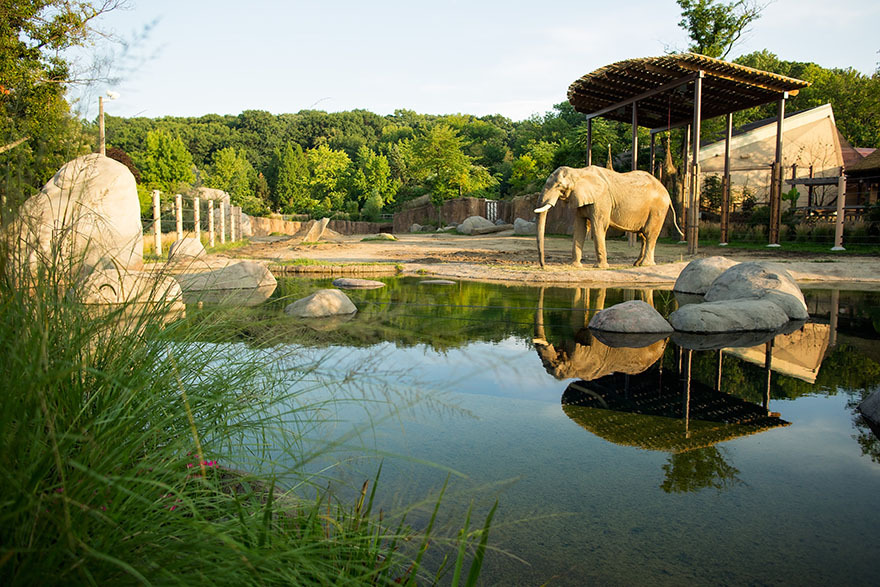
An African elephant standing at the edge of its water hole in the Cleveland Metroparks Zoo African Elephant habitat.
Photo courtesy of the Cleveland Zoological Society. (https://www.clevelandzoosociety.org/z/2021/09/10/celebrating-african-elephant-crossing)

Today’s picture is appropriate because I went to see the elephants this morning at the Cleveland Zoo — it’s a fantastic habitat and the park is wonderful. Just a reminder to get out and see the wildlife and support your local zoological park’s conservation efforts. The world may be on fire, but animals don’t care about politics (and it’s one of the areas where we can actually make a difference).

Anyway, to the latest project news. First, I haven’t been working as hard as I could have, but I’m also teaching, so… yeah. A girl’s got to be able to play PS5 sometimes, after all. That being said, I have made some progress this month. I have not visited libraries as I’d hoped, but I am making some contacts and working on setting up my categories for the eventual bibliographical data. In the meantime, I’ll keep plinking away at it (I’m almost done with libraries that start with “C”).

Number of libraries confirmed: 93
Number of libraries entered into the database: 2
*Number of extant copies confirmed: 448

*Not counting Oxford University

State of the Project, May 2024

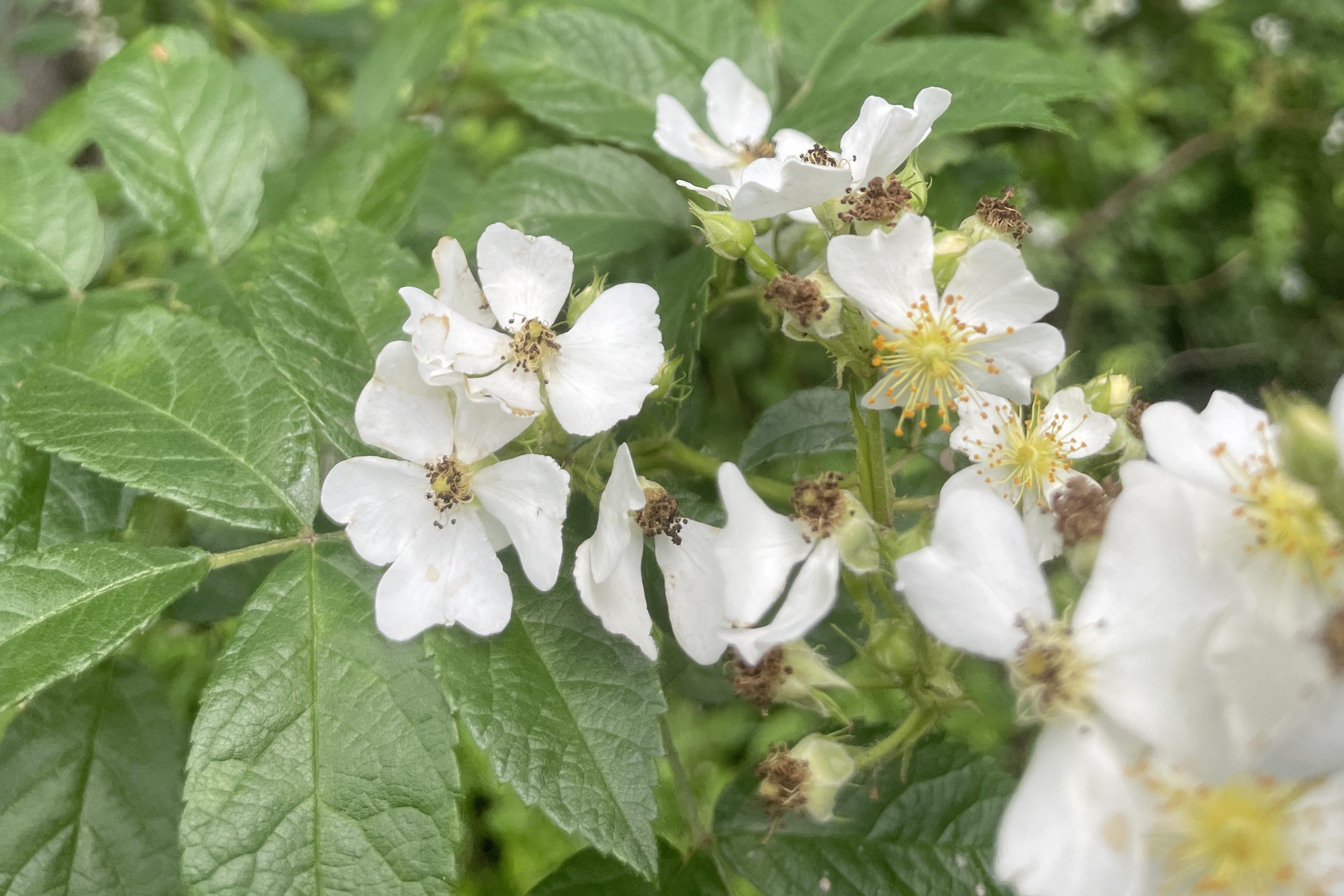
Wild white roses from my backyard, against a mass of deep green leaves.

Wild white roses from my backyard (which I just learned are invasive). Alas.

Welcome back, gentle readers! Now that the semester is over (or hopefully nearly so) I hope the summer is treating you kindly and providing needed rest and relaxation. As for me, I start teaching an online evening class next week that I am not quite done planning for, but I will be by the time we get to it.

I’m also thrilled to announce that I had my first book review published! I had the pleasure of reviewing Stephen Ramsay’s On the Digital Humanities: Essays and Provocations in ABO: Interactive Journal of Women in the Arts, 1640-1830. It was a relatively painless process, and the staff were communicative and gave excellent feedback — I’d be very happy to work with them again in the future.

As to the LBP, I’m happy to announce that I’m back to it. I’ve been verifying libraries and titles (Cornell’s Rare and Manuscript Collection, we’re going to be spending some time together in the future). I’m debating putting in for the Lewis Walpole Library Fellowship for next year — they don’t have a huge number of books I need, but the ones they have are significant and I should be far enough along by then to make use of it. My goal for the summer is to make some real headway in verifying content and to make some initial rough passes at some local copies and make decisions about how the data is going to work for the actual bibliography portion.

Number of libraries confirmed: 74
Number of libraries entered into the database: 2
Number of extant copies confirmed: 367 (not counting anything at Oxford)

Data schema, Phase 1

a brown corkboard littered with random photos, notes, and clippings held in place with colorful plastic pins, with red yarn strung between the pins connecting different articles. In the middle, a clipping says "seek for the truth."
Image by Freepik

When I was at ASECS 2024, I got a question after my presentation about how I was organizing my data. I was thinking he meant how I was setting everything up overall, for example what schema I was going to use, and I sort of only half answered him because I don’t entirely know what I’m doing for the overall project. I have realized, however, that I complicated the question far more than it required. I also realized that wasn’t something I’d talked about here, and it likely should have been. I feel very strongly that transparency in what and how and why is important — a belief that was strengthened after a really strong presentation from the great scholars behind the Women’s Print History Project about the need for DH documentation that discusses the “why” as well as the “how.”

As I’ve mentioned before, this is a project with multiple phases. Phase One involved using OCLC Worldcat and the ESTC to locate individual copies and possibly previously missed or spurious publication information. I started with the excellent list of Lennox publications in Charlotte Lennox: An Independent Mind by Susan Carlile, which gave me a huge headstart. That’s where the maps on this site came from — an early effort to identify locations and see where clusters of copies might have been located. The limitations of Google Maps, though, specifically in the number of points per map, made this of limited usefulness. I may yet go back and try to dump all of it into something like Tableau and get a master map, but I haven’t yet. Probably not until I’ve finished cleaning up the data set.

There was then an interim stage I consider Phase 1.5, in which I took the data out of Google Maps and put it into an Excel spreadsheet. The data as it stood was in the following categories:

  • ID #: this helped differentiate records so I could move them into a relational database eventually
  • Longitude: location info courtesy Google Maps
  • Latitude: location info courtesy Google Maps
  • Library Name: the name of the library with the holdings (preferably not just the special collections dept)
  • Description: intended to describe something about the book, such as edition # or suspected piracy, not the library
  • Affiliation: what institution is the library affiliated with, if any
  • Designation:(what sort of library/institution is it — this is the muddiest category because sometimes it refers to the library (unaffiliated) and sometimes to the institution (affiliated)
  • Pub Year: publication year
  • Location: where was the book published
  • Bookseller: who was the bookseller/publisher
  • Title: Title of the book/periodical

Now, as to why I chose to keep track of all this stuff, particularly about the institutions, part of it was because I thought it would be interesting to track this and see how the spread went. Part of it was because I thought it would help me track down funding to visit collections. And the last part of it, I think, is because I didn’t want to go back and add it in later in case I regretted not having it to begin with. It’s easier to cut info than to go back and add it in across all the records.

I’ve held to that philosophy as I’ve gone — I’d rather get all the information plus some and end up with something unnecessary than I would want to record less than I’d end up wanting. There is absolutely a point of diminishing returns, here, naturally, but it’s balanced by the realization that, for most of these copies, I will get only one bite at the apple. If I miss something or realize later what I needed, I may be able to get it by asking the librarians, but I likely won’t get a second visit to see it for myself. This is one reason that my local copies are my test cases, to ensure what information I’m recording and why before I start trying to build my photo album of all the special collections rooms I get to visit.

I hope this proves helpful to someone — I’m happy to provide more information or answer questions as needed. I’ll move toward describing Phase Two in an upcoming post.

State of the Project, September 2023

Greetings, gentle readers! September finds me pushing forward still, albeit a bit more slowly due to general life issues and a lot of time dedicated to sorting through the works housed at the Beinecke Rare Book and Manuscript Library at Yale. Needless to say, we’re going to have to spend some time there in the future, to no one’s surprise.

I currently have 30 libraries verified, having removed two or three so far that ostensibly had only a couple of items at most, and they turned out to either simply not be there, to belong to an affiliated library on the same system, or to be online or microfom versions of the work. I am looking at applying to the Lewis Walpole Library Fellowship this year, along with perhaps a local fellowship that might cover some gas money for libraries near to hand.

Number of libraries confirmed: 34
Number of libraries entered into the database: 2
Number of extant copies confirmed: 148